
Making a movie is always a minor miracle, but even the most star-crossed productions don’t usually have to deal with a strike and a storm within the same week.
That’s what happened to American Deadbolt, the first feature-length film shot at Athena Studios in Athens. The independent production wrapped in late July after receiving a waiver from the Screen Actors Guild giving permission for its actors to cross the picket line.
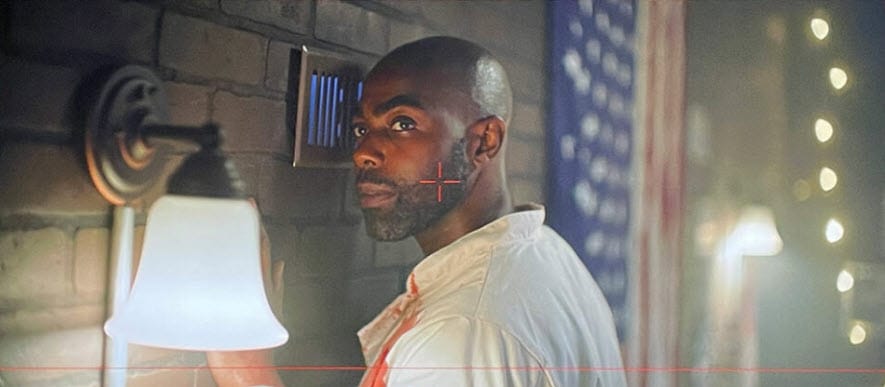
Produced by Chris Hines and Clint Ross, and written and directed by Bryan Redding—all Athens residents—American Deadbolt is about a Fourth of July terrorist attack on a restaurant. The owner and several employees hide in a safe room, but “as soon as they lock the door, they discover the greatest threat might be locked in there with them,” according to Redding.
“The idea arose from the aftermath of Jan. 6., and seeing how divided the country is,” Redding said during a Sept. 26 panel discussion at Ciné. “I was kind of pouring out my frustrations with that.”
After casting, hiring a crew and making other preparations with the possibility of a SAG strike looming, the work stoppage started on the first day of filming. As an independent production not affiliated with a studio, American Deadbolt initially received a waiver so that SAG members could work without jeopardizing their pensions and health care. But it was rescinded when SAG changed the rules, and the shoot was shut down while Hines worked behind the scenes to obtain a new waiver.
The production had already lost several days of filming when it restarted. Then, on July 20, what the cast and crew termed a “tornado”—more likely straight-line winds, according to meteorologists—knocked out power at Athena Studios and all over the city for days. The production was able to acquire a generator and continue on, but in the end had just six days to shoot instead of the expected 10–15.
“It was definitely daunting,” Ross said. “When you step back and look at what you had to do, it’s crazy. It looks nuts trying to pull it off.”
Cast and crew members credited Redding and the producers for keeping things running smoothly and ensuring no one got too stressed out. They were “super pleasant,” according to cameraman James Preston. “They made it fun to be on set. Everybody’s got to get through the hardships, but nobody has to die to do it.”