
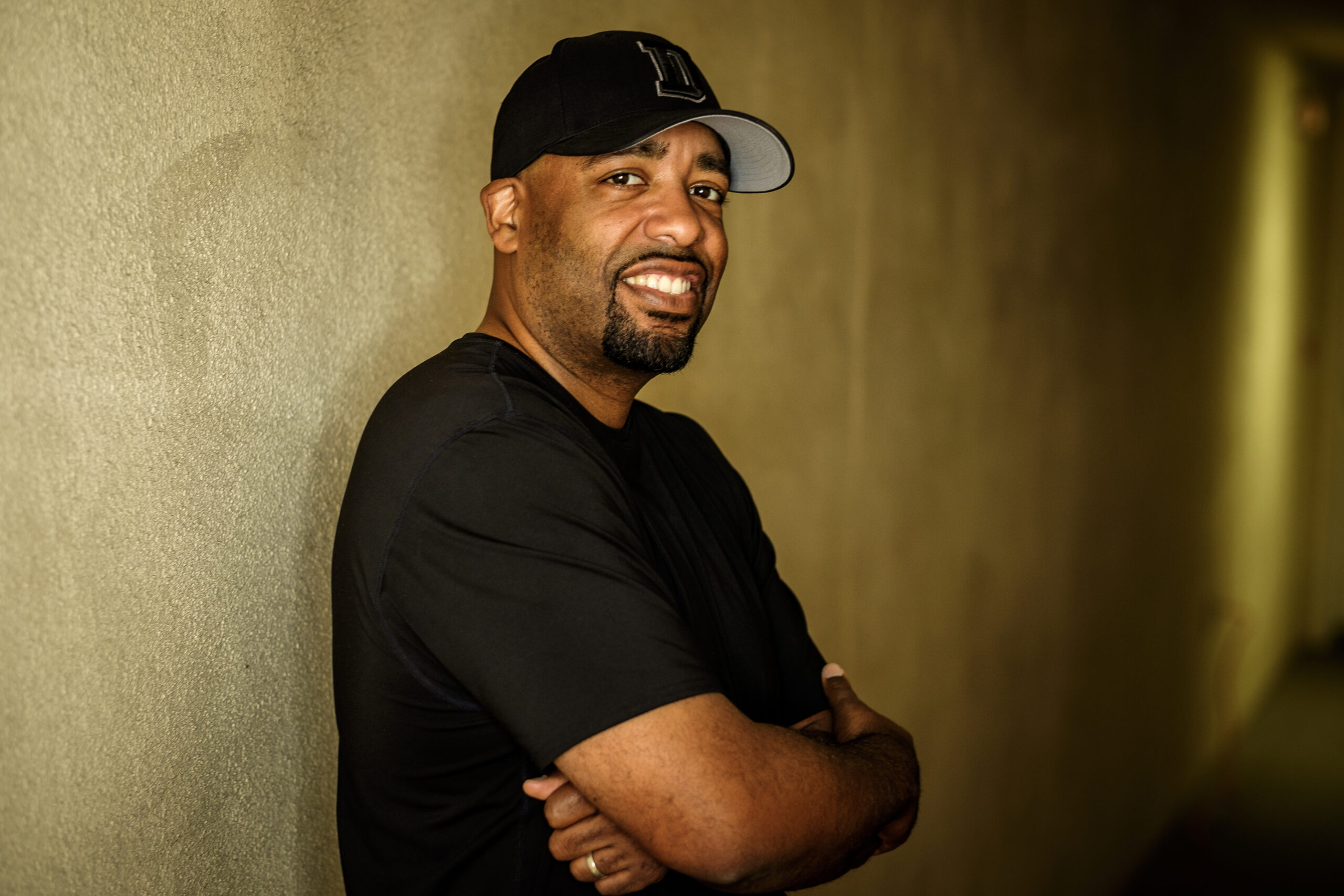
Screenwriter La Monte Edwards has completed the screenplay for The Ambulance Chaser, the feature adaptation of Brian Cuban’s acclaimed legal thriller that is being developed by award-winning producer Autumn Bailey-Ford. The collaboration marks a fusion of authenticity, cultural depth, and character-driven storytelling.
Based on Brian Cuban’s acclaimed novel, the feature is directed by Lou Diamond Phillips, who will also appear in a supporting role, and produced by Autumn Bailey-Ford. The project is backed by Atlanta-based NDoor Productions.
As Atlanta’s film industry continues to shift, with fewer large studio productions and more room for independently led projects, The Ambulance Chaser reflects how the city is becoming a destination for filmmaker-driven stories. Growth in Atlanta’s indie scene is to be expected from here on out.
Edwards, who trained in his stomping grounds, New York, and now works in television and film, said Atlanta played a major role in shaping the screenplay.
“Atlanta has a very real energy,” Edwards said. “There’s music, tension, history — it all shows up in the way people talk and move. That influenced the rhythm of the script.”
Though Edwards considers himself a New Yorker at heart, he intentionally grounded the story in Atlanta, pulling from the city’s music, culture, and street-level energy. The script reflects Atlanta’s mix of ambition, history, and grit, treating the city as part of the story rather than a backdrop.
“Every script I write has some New York in it,” he said. “But Atlanta gave this story its pulse.”
The Ambulance Chaser follows a morally conflicted attorney whose life begins to unravel when past choices resurface. The film explores ethics, identity, and redemption within the legal world.
The creative team includes cinematographer Alan Caudillo (The Cleaning Lady, Quantum Leap) and production designer Wynn Thomas (Do the Right Thing, Hidden Figures, A Beautiful Mind), who received an Academy Honorary Award for his career in film.
Producer Autumn Bailey-Ford said the project reflects what’s happening across Atlanta’s creative community.
Atlanta’s film industry is currently in a period of transition, with major production shifts affecting employment across the region. At the same time, the city has seen continued growth in independent filmmaking, supported by a deep pool of creatives, multiple film schools, and a steady stream of locally driven projects choosing to produce in Georgia.
“There’s a lot of talent here, both behind the camera and on crews,” Bailey-Ford said. “Atlanta continues to be a place where independent films can be made at a high level.”
Production is planned for Georgia.
You can learn more about the film and production at www.