
Commentary by Randy Davidson, CEO & Founder of Georgia Insider
Editor’s Note: The writer of the opinion piece in reference is Cole Murphy, a graduate of Georgia Tech and part of the Joseph Rago Memorial Fellowship program with the Wall Street Journal.
On Friday, the Wall Street Journal published an opinion piece titled “Georgia’s Film Tax Incentive Bombs at the Box Office.” Others are addressing specific factual claims in that piece. What deserves equal attention, particularly for business and civic leaders, is how the article came together — and what it signals about the evolving relationship between institutions, media and access.
The author raises several points worthy of debate, and this is not an effort to dispute them here. The concern is process. Many industry leaders were engaged as sources under the reasonable expectation of a journalistic inquiry, only to see their access and insight used to support an opinion framed as reported analysis.
I wrote a more detailed breakdown at our sister publication, Georgia Entertainment, but I decided to share some of the highlights here. Georgia Insider’s broader audience of elected leaders and business executives should be aware of these blurred lines. Especially if you deal with media.
In the fall of 2025, a Georgia-based writer identifying himself as a “writer and editor at the Wall Street Journal” began reaching out to filmmakers, studio executives, producers and myself. Collectively, the response was constructive.
There was an assumption, a reasonable one, that this was an opportunity to provide nuance, context and balance. To explain not only what had slowed, but what had been built, and why states, cities and countries around the world continue to compete aggressively for creative industries.
The outreach was framed as reporting. In nearly every case, the message was some version of:
“I am a writer and editor at the Wall Street Journal. I am working on a story about how the Georgia film industry is adapting to changes in the broader entertainment industry.”
Interviews were requested. Quotes were gathered. Contacts were shared. Conversations were candid. Access was extended in good faith, with the expectation of fairness, balance and open-ended inquiry. That expectation was reinforced repeatedly. The representation was clear: this was an effort to understand what was actually happening in Georgia’s film industry.
Only later did it become clear that the article was written as part of the Journal’s Joseph Rago Memorial Fellowship — a respected early-career intern program commonly associated with opinion writing. That distinction was not disclosed upfront. Had it been, many of us would have approached those conversations differently.
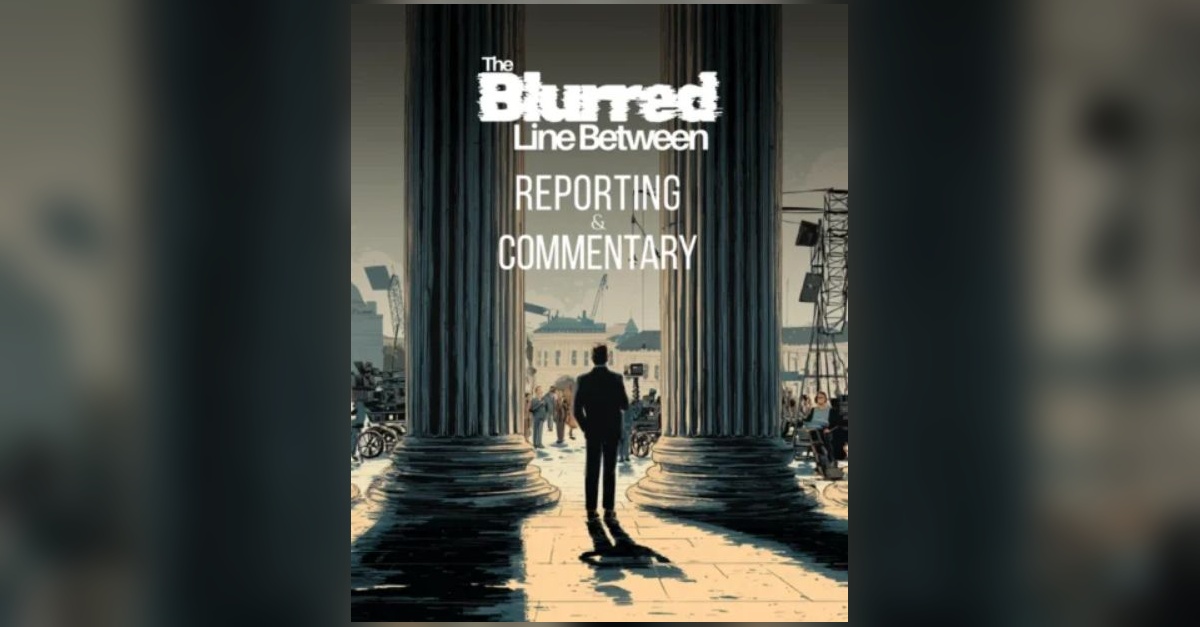
When the final piece ran, it appeared as an opinion article, published under the formidable institutional banner of the Wall Street Journal. The tools of reporting were used to gather material, but the obligations that accompany reporting were sidestepped by classification. Labeling the work “opinion” insulated the piece, even though it was built through methods that signal journalism to sources.
To be clear, this is not a denial of reality. The slowdown in film production is real. Labor costs matter. Global competition is intense. Capital has tightened post-pandemic. Strikes hurt the industry nationwide. Those are lived facts. What was not disclosed was that candid conversations about those realities would ultimately be used to advance an opinion piece we were never told was being written.
Equally absent was meaningful engagement with the broad consensus among economists and economic-development professionals that storytelling, creators and intellectual property remain among the most powerful growth engines in modern economies. Data supporting that view — including widely cited studies — was shared. It did not meaningfully shape the final framing.
Focusing narrowly on a cyclical downturn while omitting that context is not balance. It is omission. But it is also opinion, and opinion has a place.
Commentary is valuable. Criticism is healthy. Debate sharpens policy. What matters is transparency. Opinion should be clear about what it is, and institutions should be equally clear about how it is produced. Opinion writers do not get to borrow the credibility of reporting without accepting the responsibilities that come with it.
For Georgia Insider’s audience — elected leaders, CEOs, institutional executives and civic decision-makers — the takeaway is straightforward. As media models evolve and lines continue to blur, clarity matters.
When access is requested under the banner of journalism, it is reasonable, and increasingly necessary, to clarify upfront whether the work is intended as reporting or commentary.
That awareness is prudent.