
By Grant Wainscott
Economic development and tech entrepreneurship career veteran Grant Wainscott explores Lithuania in the first of a series of stories about Georgia’s opportunities for global initiatives and partnerships through international markets, cross-border investments and cultural and diplomatic relationships.
Lithuania has banking charters, innovation hubs and clear public policy – here’s why it might be the perfect place for Georgia’s expanding international relationships.
For the past decade, conversations about global technology growth have centered on a familiar set of markets like Silicon Valley, London, Berlin, and Singapore. But for states like Georgia, the next phase of competitive advantage will not just come from chasing the same destinations as everyone else.
Georgia’s advantage will come from building intentional ties with high-performing but often overlooked international markets that share similar economic DNA. This is especially fitting given Georgia’s concentration of consulates and honorary consulates, which are already working to deepen international relationships.
Lithuania is one of those key overlooked markets. Georgia can lean into the potential partnership through a few key avenues.
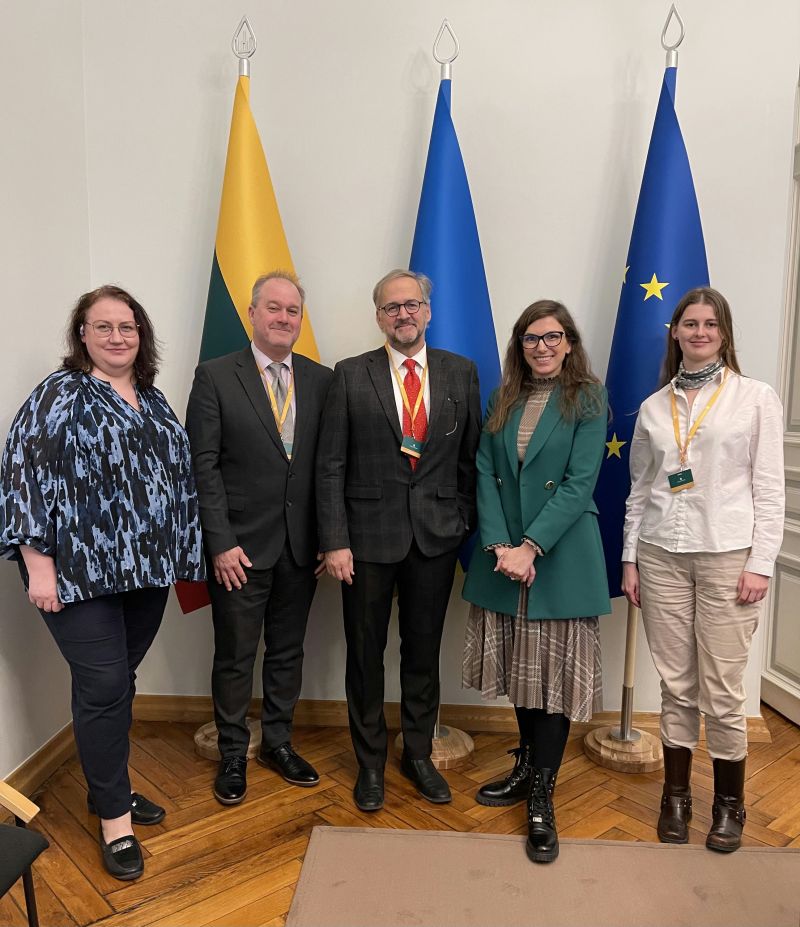
During a recent market exploration trip to the Visegrád Group in Central Europe with my business partner John Woodward, we had discussions with regulators, investors, and founders in Lithuania’s capital city of Vilnius.
They offered a clear lesson: smaller markets can punch far above their weight when they combine regulatory clarity, institutional coordination, and a deliberate focus on globally scalable industries. For Georgia, Lithuania is not an exotic outlier. It is a practical case study and potentially a strategic partner.
Beyond Fintech: A Multi-Cluster Ecosystem
Lithuania is frequently described as a fintech success story, and for good reason. Since Brexit, the country has positioned itself as a leading European hub for fintech licensing and supervision, with firms gaining access to the full EU consumer market through a clear and efficient regulatory regime overseen by the Bank of Lithuania.
The implementation of a fast-track, transparent bank and electronic money institution licensing framework that dramatically reduced approval timelines while preserving supervisory rigor prompted a surge of financial institutions to seek EU market access. But fintech is only one part of the picture.
WhatI learned on the ground is that Lithuania has intentionally cultivated several industry clusters that extend well beyond financial services. These include information and communications technology and cybersecurity, life sciences and biotechnology, and advanced manufacturing and engineering. Each cluster is supported by a mix of regulatory predictability, workforce development, and active engagement from institutions like Invest Lithuania and industry-led organizations like Unicorns Lithuania.
The result is an ecosystem designed not for local scale, but for international relevance.
A Familiar Pattern for Georgia
What makes Lithuania particularly relevant for Georgia is not simply its success, but how familiar its strategy should feel.
Georgia has spent decades building its own global reputation as a business-friendly environment for innovation and investment, especially in regulated industries. Much like Lithuania’s fast-track banking license program, Georgia’s willingness to experiment at the regulatory level can be demonstrated by the recent demand for the Merchant Acquirer Limited Purpose Bank (MALPB) charter issued by the Georgia Department of Banking and Finance.
It mirrors Lithuania’s approach of using policy design as a competitive asset rather than a constraint.
According to the State, the MALPB charter was “created to allow entities engaged in merchant acquiring or settlement activities to directly access payment card networks.” This essentially allows payment processors in Georgia to directly access the card networks like Visa and Mastercard for merchant acquiring, instead of needing the traditional sponsor banks, and simplifying the overall process.
Recent economic development announcements from global brands like checkout.com, coupled with existing Transaction Alley stalwarts like Fiserv, are putting this 2012 piece of legislation to work, and giving Georgia a competitive advantage over other states.
Like Lithuania, Georgia has also resisted the temptation to concentrate its technology narrative in a single city. While metro Atlanta remains a critical hub, fintech and financial services employment is also deeply rooted in other regions like Columbus. Talent development extends statewide through the Georgia Fintech Academy, operating across the University System of Georgia, which is preparing to celebrate this spring the milestone of 10,000 students served through this industry-leading program.
That distributed model, ecosystem rather than enclave, is one of the most underappreciated parallels between Georgia and Lithuania.
Where the Clusters Align
Fintech may be the most visible overlap, but it is not the only one.
Both Georgia and Lithuania have invested heavily in information and communications technology (ICT), software, and cybersecurity, often driven by national security considerations and public-private collaboration. Lithuania’s proximity to geopolitical risk has sharpened its focus on cyber resilience, while Georgia’s own cyber ecosystem benefits from recent major defense investments in Augusta, federal contracting activity around the state, and an established base of cyber security firms in metro Atlanta, such as SecureWorks and Evident ID.
Advanced manufacturing is another point of convergence. Lithuania has developed strengths in precision manufacturing, electronics, and engineering-driven exports, supported by special economic zones and industrial digitization. Georgia’s advanced manufacturing base, which spans aerospace, automotive, industrial components and much more, faces similar challenges and opportunities as global supply chains reconfigure.
Life sciences and health technology offer a third area of emerging alignment. Lithuania’s life sciences sector, while smaller, is research-driven and export-oriented. Georgia’s combination of research universities, healthcare systems, and logistics infrastructure creates natural opportunities for collaboration in medical devices, digital health, and applied research commercialization.
In each case, the logic is the same: durable international partnerships are built where industry structures, not just headlines, align.
Why Lesser-Known Markets Matter Now
There is a tendency in U.S. state-level economic development strategy to focus international engagement on the most visible markets. While that approach certainly yields tangible results, it should not be the only avenue for growing jobs and investment. As technology firms globalize earlier and regulatory environments fragment, access, clarity, and speed often matter more than brand recognition.
Markets like Lithuania understand this dynamic precisely because they have had to. They compete by offering certainty, responsiveness, and a clear value proposition to internationally minded companies. Building deeper ties with smaller countries is not about replacing traditional trade relationships. It is about complementing them with partnerships that are agile, sector-specific, and mutually reinforcing.
A Strategic Opportunity for Georgia
Georgia has already demonstrated that it can position itself as a go-to market for regulated innovation, workforce development, and logistics-enabled growth. We are now recognizing that our most natural international counterparts may not always be the largest economies, but the ones that share a similar approach to policy, scale, and execution.
Lithuania’s experience shows what is possible when a jurisdiction treats regulation as infrastructure, clusters as strategy, and international engagement as a core competency rather than an afterthought. For Georgia’s business leaders and policymakers, the lesson is not to copy other models wholesale, but to recognize the opportunity in building intentional, multi-sector ties with markets that already think globally by necessity.
Georgia has spent years proving it can punch above its weight. The challenge now is deciding where, and with whom, it wants to do so next. Identifying new innovative hubs, whether driven by opportunity or necessity, will both encourage and challenge Georgia to maintain its title as a top place for innovation to thrive across a host of technology, creative, financial, and medical industries.

Grant Wainscott is the Founder & Managing Partner with the boutique economic and business development advisory ABF Consulting. He is a seasoned global economic & community developer, entrepreneur, and business consultant with 30 years of experience helping companies, communities and ecosystems grow.