
by Delaney Tarr, Managing Editor
For thousands of Americans, the past week has been a travel nightmare.
Airports have been in disarray since the ongoing partial government shutdown turned into a fiasco on March 13, when Transportation Security Administration workers received their first $0 paycheck and walked out en masse. Air travel got even more complicated when a wave of inclement weather canceled thousands of flights across the country.
With the Department of Homeland Security shutdown, TSA employees have two options: work without pay or leave the job. Many have chosen the latter. In the past week, about 36% of the employees at Atlanta Hartsfield-Jackson International Airport called out according to airport officials – and hundreds quit nationwide.
Those who are working without pay will have to wait for back pay as the government reopens. Since Feb. 14, Republicans and Democrats have been in a stalemate over funding for the U.S. Immigration and Customs Enforcement, or ICE. In the meantime, that leaves 47,000 TSA workers without pay.
Delta Airline CEO Ed Bastian recently released a statement to WSB-TV’s Channel 2, where he apologized for the delays.
“It’s inexcusable that our essential transportation workers are not being paid due to the partial government shutdown, but I’m hopeful for a resolution soon from Washington,” Bastian said. “In the meantime, I want to thank our incredible Delta people in Atlanta who have been working around the clock to provide extra care for our customers at Hartsfield-Jackson Atlanta International Airport who have been impacted.”
And it’s all during spring break travel. TSA projected about 350,000 travelers at the Atlanta airport from March 19-22. It’s one of the busiest travel times of the year at the world’s busiest airport – all on a skeleton staff in the midst of a winter storm.
I experienced the fiasco myself on March 16. I had tickets for a quick flight that morning from Atlanta to Orlando, to see my family in my home state. But the night before takeoff Delta sent out a worrying email.
The meteorology team forecast “inclement weather” in the Northeast, and Delta was offering “weather waivers” to let travelers rebook for a later date. I had theme park tickets for the morning of March 17, so I opted to keep my ticket.
But the airport was in chaos when I arrived at Atlanta Hartsfield-Jackson International Airport early March 16. News crews gathered around baggage claim and the security line snaked through the entire South Terminal. The TSA PreCheck line where I stood stretched to the end of the baggage claim.

General security lines ran about two hours. PreCheck lines were about 45 minutes. But 20 minutes into my wait, I got a notification: My flight was canceled. A TSA agent advised me to stay in line and try to rebook, so I put my name on the standby list for three more flights.
In the meantime, my father booked a “backup flight” with free cancellation on Southwest Airlines for $875. But mere minutes later, the Southwest flight was delayed until 11 p.m. and my standby requests were rejected. My only options were two lengthy layovers in Raleigh and New York, or a flight that would land in the middle of the night. All three felt risky, given the dozens of cancellations happening every minute.
So I opted to rent a car and drive the six-hour distance instead.
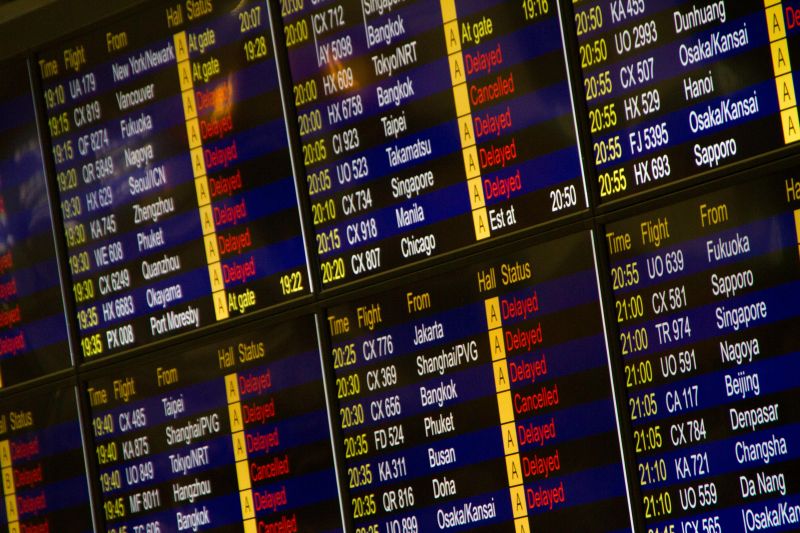
The flight board was packed with red “canceled” flights as I got out of line. On that Monday, Atlanta canceled more than 500 flights. Nationwide, airlines had to cancel more than 4,800 flights. It was clear the weather and the TSA issues were multiplying to a catastrophic effect, and air travel would not come easily in the following days.
But plenty of people had alternatives. In fact, the rental center was packed. I pre-rented a vehicle, but after waiting in another 45-minute line the Thrifty employee told me it would be a three-hour wait for my car of choice. My only option would be to rent a one-way Dodge Durango for around $1,000 a day.
I asked the employee if these were bang-up business days for the rental car centers, but he had a different take.
“We have too many one-way trips, so we’re running out of cars,” he said.
There was a definite business boom, but it wiped out the Thrifty stock. I took my car and left for Orlando, but the whole time, all I could think about was the money. In total, I lost over $1,000 on a difficult travel day. I wasn’t the only one.
Several people were also renting cars for impromptu trips, or were forced to spend an extra night in a different town and scramble for a hotel room. Hartsfield-Jackson airport has even offered free parking, MARTA and meal vouchers to help offset the cost.
The inclement weather represented a particular crisis for airports across America, but it compounded an already massive issue: unpaid TSA staff in one of the country’s most popular travel times. And the delays are still impacting every person with a plane ticket – with or without bad weather.
But the real loss is on the corporate end – the monthlong partial shutdown has already dealt a $2.5 billion blow to the economy, according to White House economists.
If the TSA agents don’t get paychecks soon, these issues will continue, and it’s not just because of inclement weather. Some TSA officials told Aviation News they may have to “quite literally shut down” smaller airports until DHS reopens.
Rental car centers and hotels may get a quick booking boost, but as long as the shutdown continues TSA lines will grow. Without adequately staffed airports, travel conditions will likely get worse, and the industry could see more multibillion-dollar impacts.
CEOs and national leaders are pushing to bring back DHS funding and end the shutdown, but in the meantime, I can give a traveler’s recommendation: stick to the roads.
Delaney Tarr is a Florida native-turned-Georgia lover with years of experience covering the ins and outs of Atlanta. She specializes in untold stories, eclectic profiles and hard-hitting news.