
By Randy Davidson and Jezlan Moyet of Georgia Insider and Georgia Entertainment
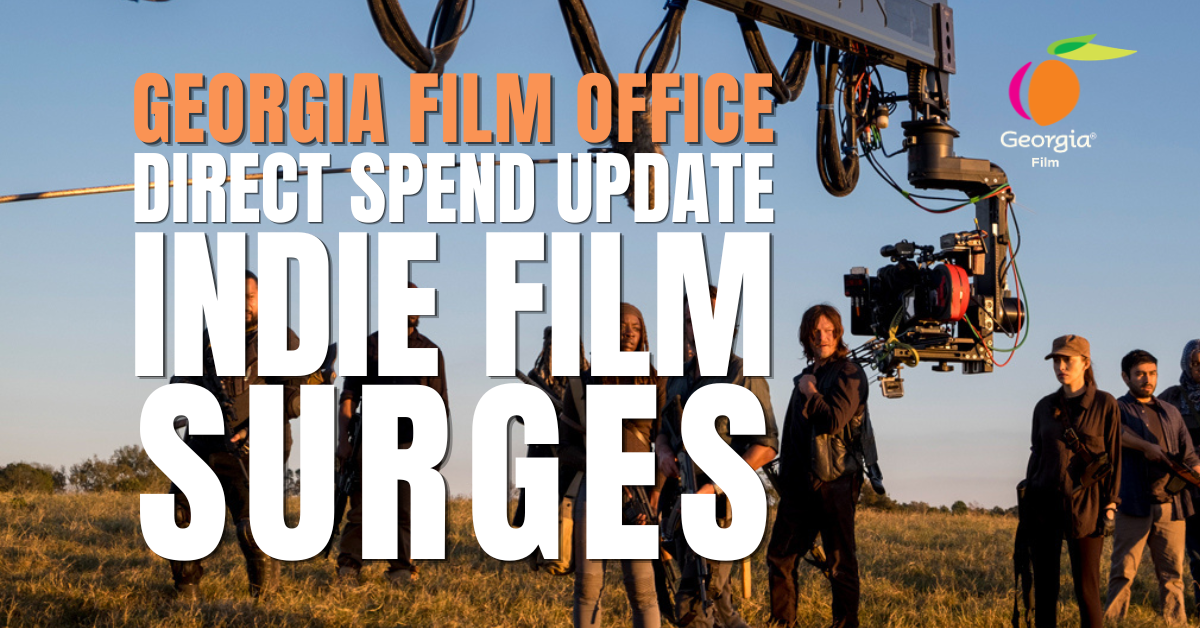
Georgia’s film industry received encouraging news this week as the Georgia Film Office announced that productions generated $2 billion in direct spending during Fiscal Year 2026 across 280 productions, even as the global entertainment industry continues to navigate reduced budgets, increased competition and a rapidly evolving marketplace. The state also saw a 14 percent increase in total projects, including an 83 percent surge in independent productions.
Those numbers deserve a closer look.
Around the world, studios have become more disciplined with spending. Streaming companies have recalibrated their content strategies. Nations and states continue to compete aggressively for production. Against that backdrop, Georgia remained one of the industry’s most reliable production centers. That is a testament to the experienced crews, world-class infrastructure, collaborative communities and reputation the state has earned over the past two decades.
It is also important to understand what the state’s numbers represent.
The reported $2 billion reflects direct production spending in Georgia. That figure is intentionally narrow. It does not fully capture the broader economic activity created when productions support hotels, restaurants, transportation companies, construction firms, equipment suppliers, retail businesses and countless other local enterprises even after the production ends. Nor does it account for the long-term tourism value that follows successful productions or the careers that are built because the industry continues to create opportunity across the state.
In other words, the direct spending figure is the starting point of the discussion. The report also arrives at an important moment.
Across Georgia, conversations are gaining momentum about what comes next for the state’s creative economy. Business leaders, entrepreneurs, educators, economic developers and policymakers are increasingly exploring how Georgia can build on its production success while positioning itself for the next generation of opportunity.
The numbers released this week reinforce why those conversations are so important. Georgia has proven it can compete for production and that it delivers on the highest level, with 27 Emmy nominations in 2026. The next opportunity is to compete even more intentionally for the ideas that drive production.
That means creating an environment where intellectual property is developed and financed, creative technology companies are launched, entrepreneurs build globally competitive businesses and emerging storytellers see Georgia as the best place to start and scale their careers. Production will always remain an essential part of the equation, but long-term economic leadership increasingly belongs to the origination of intellectual property and innovation.
As another legislative session approaches and Georgia’s leaders begin shaping priorities for the years ahead, this is an ideal time to ensure that policy, economic development and industry strategy continue evolving together. Protecting the foundation that has made Georgia a production leader is essential. Building upon it is the larger opportunity.
This year’s report should be viewed as confirmation that Georgia has built something sustainable. The industry’s foundation remains strong, its relationships remain valuable, the ecosystem continues to mature, independent filmmaking is gaining momentum and the state is well positioned to write the next chapter of its creative economy.
See full report at Georgia Film Office