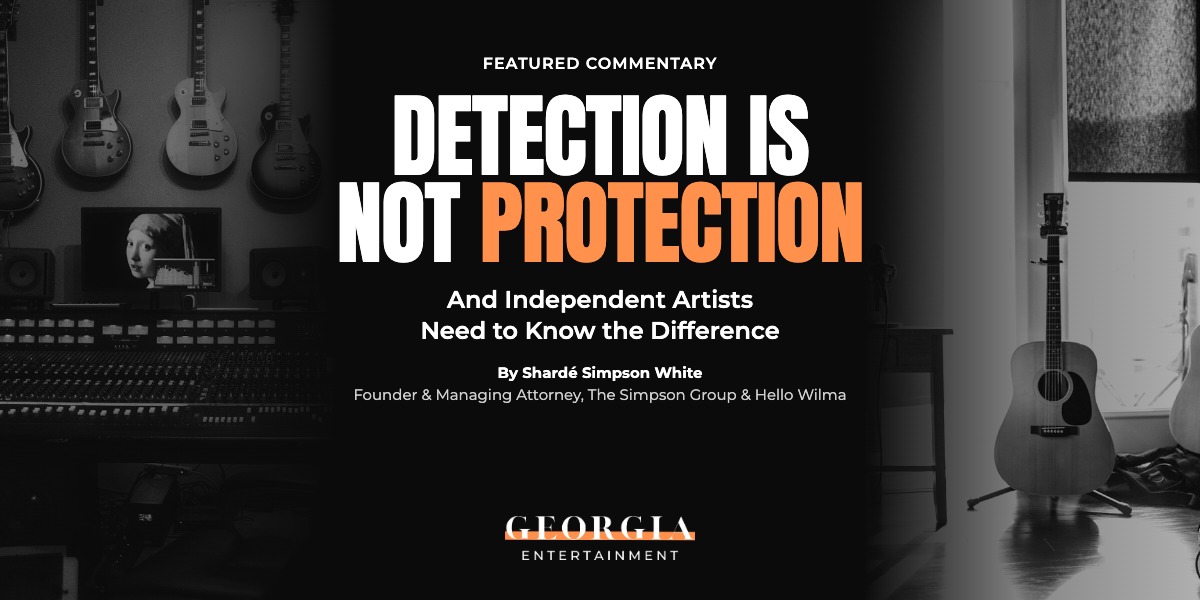
Featured commentary by: Shardé Simpson White, Founder & Managing Attorney at The Simpson Group & Hello Wilma
The conversation around AI and music is moving fast. Faster than most independent artists can keep up with.
In the last 90 days alone we have seen distribution companies begin automatically blocking tracks flagged as AI-generated, new legislation introduced at the state and federal level around voice and likeness rights, and now the launch of detection technology that can analyze a track and issue a certified verdict on whether AI was involved in its creation.
This is meaningful progress for the industry. But I want to be honest about what it does not solve.
Detection technology answers one question: is AI present in this music?
It does not answer the questions that actually keep independent artists up at night.
What did I agree to when I signed up for my distribution platform? Can my distributor block my release based on an automated flag even if that flag is wrong? If I used an AI tool to clean up my vocals or generate a reference melody, does that make my entire track AI-generated under my contract’s terms? If my music is used to train an AI model without my consent, what are my options?
These are legal questions. And right now, most independent artists have no access to the answers.
The detection layer is being built. The protection layer that sits on the artist side of this equation is still largely missing.
Here is what that protection layer actually looks like in practice:
It is understanding your distribution agreement before you upload not after your release is blocked. It is knowing whether your contract contains AI training language that grants your distributor rights to your catalog you never intended to give away. It is having an AI disclosure protocol in place before you collaborate with producers who use AI tools, so you are not caught off guard by a platform’s automated review. It is understanding the difference between a sound recording copyright and a composition copyright and why both matter in the AI conversation.
None of this requires a retainer. None of this requires an attorney on speed dial. It requires access to the right information at the right moment.
The music industry is building the infrastructure it needs to navigate AI. Independent artists deserve the same investment in their side of the equation.
Detection is infrastructure. And right now, the artists who need protection the most are the ones least equipped to access it.
That is the gap. That is the work.