
By Peter Bowden
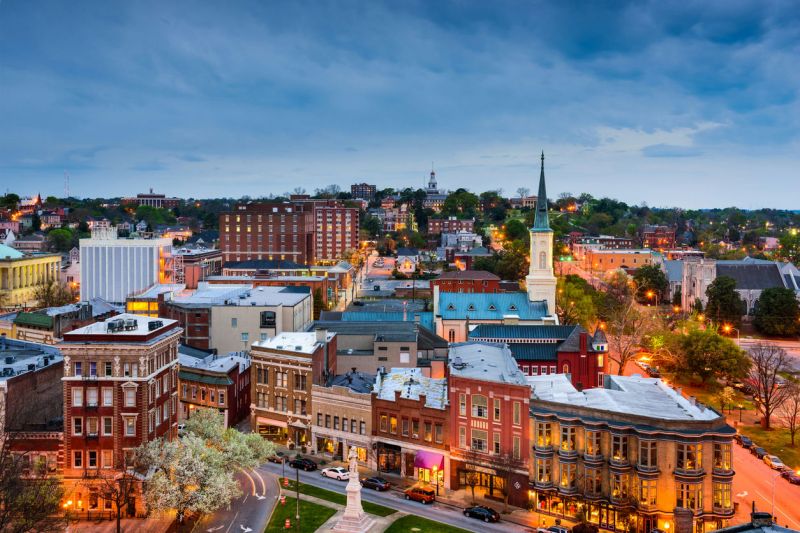
Macon has always had the raw ingredients of a strong visitor economy with its music heritage, distinctive architecture, a walkable downtown core, and signature events that give people a reason to choose now instead of “someday.”
What’s changed in the past few years is the scale and the sophistication: Macon’s tourism economy is producing measurable gains in visitor spending, local tax revenue, and job support, while new venues and emerging segments (sports, film, and outdoor recreation) are widening the funnel.
The result is a visitor economy that’s increasingly central to Macon-Bibb’s broader growth strategy, an engine that supports small business vitality, downtown momentum, and public-sector capacity.
“That consistency is what matters,” Visit Macon President and CEO Gary Wheat said . “It’s what led Mayor Lester Miller to establish tourism as one of the pillars of his administration, backed by direct investment in tourism infrastructure and destination marketing through Visit Macon.”
The headline numbers: spending, jobs, and tax relief
Tourism’s value is easiest to understand when it’s translated into local dollars and household impact. In 2024, visitors spent $476.1 million in Macon-Bibb County, up 3.9 percent year-over-year.
That spending doesn’t just happen at hotels; it ripples outward to restaurants, retail, attractions, gas stations, transportation, and entertainment. Visit Macon summarizes that relationship with a memorable multiplier.
Wheat notes, “for every $1 spent at a hotel, an additional $5.60 is spent in the community, in restaurants, retail, attractions, and transportation.”
Those visitor dollars also translate into public revenue. In 2024, Macon-Bibb County recorded just over $6.6 million in hotel-motel tax collections, a nearly 7 percent increase year-over-year. And importantly, the visitor economy helps offset resident tax burden: Visit Macon reports tourism-generated taxes save the average household $602 annually, and that eliminating the visitor economy would equate to an added $8,393 per household per year in cost/burden.
On the employment side, tourism isn’t a side hustle, it’s a workforce category. Visit Macon reports 4,860 tourism-related jobs supported in the community. These jobs span a wide ladder of opportunity: front-line hospitality roles, culinary and service careers, attractions, venue and event operations, guiding and outdoor recreation, marketing and creative services, plus managerial pathways that keep talent local.
Where the money comes from: events, venues, meetings, and sports
Macon’s tourism economy is increasingly built around demand drivers, the kind that create overnight stays, fill restaurants mid-week, and push visitation into shoulder seasons.
Signature festivals that drive overnight travel
The International Cherry Blossom Festival remains a flagship. Visit Macon’s FY25 annual report cites $6.5 million in economic impact and 201,027 unique visitors (a 7.2 percent increase), with meaningful non-local penetration: 35.1 percent of spending from out-of-town visitors, 41,287 visitors from 50+ miles, and 34.1 percent of attendees traveling from out of state. That mix matters because non-local attendees are the ones booking rooms and buying multiple meals—high-value behavior for local businesses.
Meanwhile, seasonal programming is also producing real outcomes. The Macon Christmas Light Extravaganza spans 38 days during the holiday season, attracts more than 700,000 visitors – including over 115,000 visitors traveling from more than 50 miles away – and similarly produces over $6 million in economic impact.
“These festivals anchor our tourism year,” Wheat said. “But they’re also supported by a deep and diverse line of cultural events.”
Those include the Tubman Museum Pan African Festival, Bragg Jam, King of Soul Festival, Mural Fest, All Blues Music & Arts Revival, Gabba Fest, the Macon Film Festival, and the Ocmulgee Indigenous Celebrate, together creating reasons to visit across seasons and audiences.
Entertainment infrastructure that scales visitation.
New and upgraded venues act like tourism “machines,” they manufacture reasons to visit. The Atrium Health Amphitheater is a clear example.
“The amphitheater has become a true visitor attraction,” Wheat said. “Boosting hotel demand during shoulder periods and expanding our reach into new markets tied to live entertainment.”
Visit Macon reports that by the end of 2024, the amphitheater hosted 22 shows, attracted 100,000+ fans, and generated $20 million+ in total spending tied to those shows (roughly $200 per attendee). Macon-Bibb County reporting reinforces the scale of this impact, describing average community spending associated with the amphitheater that exceeded $20 million in 2024.
Meetings and conventions that fill rooms mid-week
Leisure travel is visible, but meetings are often the quiet stabilizer. Visit Macon’s FY25 annual report indicates convention sales generated $13.8 million+ in economic impact and 14K+ definite room nights, exceeding targets. In business terms, that’s valuable demand: it boosts occupancy when leisure may soften and supports service-sector scheduling stability.
Visit Macon is working with the Macon-Bibb County Urban Development Authority on plans for a future downtown convention center, which would build on the success of existing group business.
“A new convention center, combined with increased airline traffic at Middle Georgia Regional Airport, would significantly enhance Macon’s competitiveness as a meeting destination,” Wheat said.
Sports tourism that creates predictable demand
Sports events convert facilities into economic impact. Visit Macon cites major impacts from hosting state championships and tournament series; examples include $6 million+ tied to GHSA state championships plus additional multi-million-dollar impacts from tennis, pickleball, and other tournaments. This is where Macon’s advantages compound: centralized location, drive-market accessibility, and growing inventory of venues.
“Sports tourism delivers predictable demand and repeat visitation,” Wheat said. “It’s a critical component of our sales and marketing strategy.”
Current trends shaping Macon’s visitor economy
- Drive-market growth and “short-trip” behavior. Macon’s top feeder markets include nearby metro areas and regional cities, a pattern consistent with the broader U.S. preference for shorter, more frequent getaways (especially when travelers can justify two nights with a concert + food + a cultural hook).
- Experiential travel wins. Music heritage, culinary identity, and festivals are no longer “nice to have.” They’re the differentiators. Macon’s storytelling with its historic places, iconic artists, and live entertainment turns a stopover into a destination.
- Sports and “active travel” are rising. Pickleball is a case study. Rhythm & Rally promotes itself as the world’s largest indoor pickleball facility (32 courts), positioning Macon for tournament-driven visitation.
- Film visibility as marketing. Productions create earned media and itinerary curiosity (“Where was that scene shot?”). Local reporting notes major projects filmed in Macon, including Superman locations around Terminal Station and continued film activity connected to Tulsa King.
“These trends align well with who we are as a destination,” Wheat said. “We’re authentic, creative, and built for experience.”
They are also buoyed by statewide momentum. Georgia’s tourism office has highlighted record-setting performance in recent years, including growth in business and convention travel spending, helpful context because state brand strength and airline/drive-market dynamics lift local destinations too.
Possible future trends: what to watch in 2026 and beyond
Looking forward, Macon’s opportunity is not just “more visitors,” but higher-value visitation, longer stays, broader geographic reach, and more off-peak demand. Several developments could influence that trajectory:
- National park visibility as a demand multiplier.
Congressional activity has continued around establishing an Ocmulgee Mounds National Park and Preserve, which could reshape perception and planning behavior for heritage/outdoor travelers. Even the possibility of redesignation tends to elevate awareness, attract media, and encourage trip-building around the asset.
“The park is not just a tourism driver,” Wheat explained. “It represents a cultural collaboration with the Muscogee (Creek) Nation and would be the first National Park co-managed by a removed Indigenous people.”
- Global soccer and “base camp” opportunities.
Visit Macon reports work with Mercer University and Macon-Bibb to pursue FIFA-related base camp activity, including selection as a base camp site for Los Angeles Football Club (LAFC) in the Fédération Internationale de Football Association (FIFA) Club World Cup 2025 and efforts to bolster positioning for the FIFA World Cup 2026 environment. If leveraged well, this can generate international visibility, group demand, and repeat visitation beyond the tournament.
- Dedicated funding mechanisms for tourism development.
Local policy changes can create durable capacity. Reporting indicates Macon-Bibb planned a $3 nightly occupation tax on hotels and short-term rentals beginning in January 2026, with projections of millions for tourism-related projects. The strategic question will be allocation: wayfinding, product development, event recruitment, and neighborhood improvements that enhance visitor experience and resident quality of life.
- Continued expansion of venue-led visitation.
As Amphitheater programming matures, the next frontier is packaging: multi-night “concert weekends,” bundled attraction passes, and coordinated calendars that reduce friction and increase per-visitor spend. With proven spending impact already documented, incremental improvements in scheduling and visitor conversion can produce outsized returns.
“Visit Macon’s vision for the future of tourism in Macon centers around tourism infrastructure coming online,” Wheat said. “Joining the National Park push, Macon-Bibb County is working on plans for a new arena as well as a convention center and hotel downtown.”
He continued, “These projects will join Mercer University’s new Medical School development on the banks of the Ocmulgee River downtown.”
The takeaway
Macon’s tourism economy is no longer best described as marketing or “nice weekends downtown.” It is measurable economic infrastructure. With $476.1 million in visitor spending, record lodging tax collections, and thousands of jobs supported, tourism functions as both a private-sector revenue driver and a public-sector stabilizer. The near-term strategy is clear: keep strengthening demand drivers (events, venues, sports), deepen the visitor experience (product, packaging, service), and build long-run resilience through assets with national reach (Ocmulgee, film visibility, and major-sport moments). The destinations that win the next decade won’t just attract visitors—they’ll convert attention into longer stays, broader seasons, and community-wide prosperity.