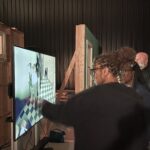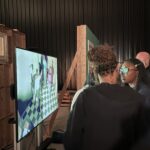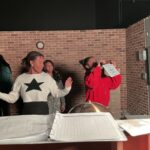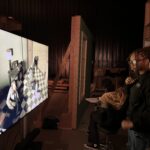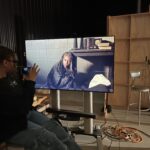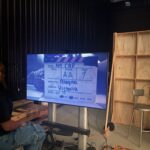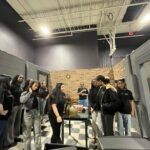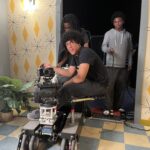
In December 2025, GFA partnered with Fayette County and Forsyth County Schools to beta‑test a new style of film competition: the On‑Set Film Sprint. Four teams from three high schools, Fayette County HS, Forsyth Central HS, and West Forsyth HS, were given a simple but challenging structure:
- 1 week to write a script
- 1 production day at the GFA Assembly Studios Hub
- 1 week to complete post‑production
Seven days before their scheduled shoot, GFA staff shared reference photos of the available sets (sets originally built by GFA students in the Production Pathway). From there, teams immediately began developing their stories, selecting their sets, writing a two‑page script, and completing as much pre‑production as possible.
Competition Goals
The Film Sprint was designed to:
- Give students firsthand experience with why professional filmmaking best practices matter.
- Remove the limitations of short class periods and long project timelines common in high school schedules.
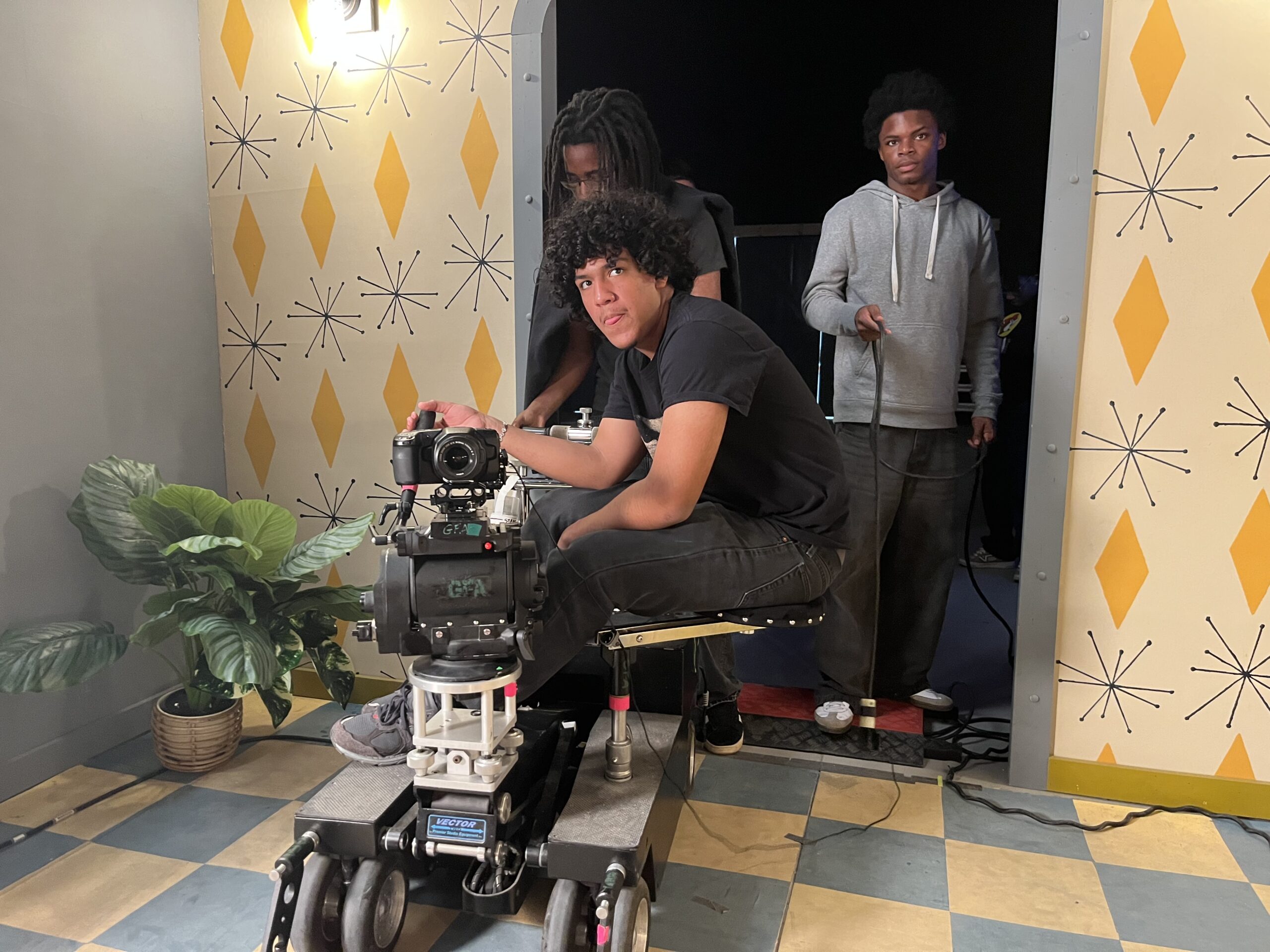
- Immerse students in an environment that closely mirrors a real production by using GFA sets and equipment such as our camera dolly, lighting equipment, and grip gear.
- Encourage efficient storytelling through a two‑page script limit.
Instead of traditional film‑competition prompts (required props, lines, or genres), each team was required to incorporate planned production techniques: at least two shots with intentional camera movement and purposeful sound design (such as including Foley or other post‑production audio work).
Teams were capped at 12 participants, including actors, to encourage intentional crew assignments and thoughtful role choices.
Production Day
Each school approached its production day differently. With more than six hours of dedicated shooting time, teams could focus on elevating their films rather than rushing. Some brought hair and makeup crew; others invested extra time into lighting setups; some groups took extra time understanding how the dolly worked, another used the extra time to focus on their props and practical effects.
Initially, GFA staff and teachers planned to take a hands‑off approach, stepping in only for safety. But it quickly became clear that the Film Sprint offered a rare, once-in-a-year teaching opportunity to impart in-the-moment support to help students get the absolute most out of the experience. Student autonomy was important, but so was leaving with enough footage to actually have a film. This meant we were periodically stepping in to help troubleshoot equipment issues, clarify lighting concepts, nudging directors to explore different shots/moves, and reminding teams of essential concepts (like getting master shots first or pre-planning shot sequences) that could be the difference in an amazing experience and completed film, or day of regret.
We Were All Students That Day
The beta test proved invaluable, prompting GFA to rethink how our “at‑hub” workshops can better blend instruction with student independence.
In addition to their two‑minute short films, each team also created a behind‑the‑scenes reel documenting their experience.
Watch the films and BTS reels here.