
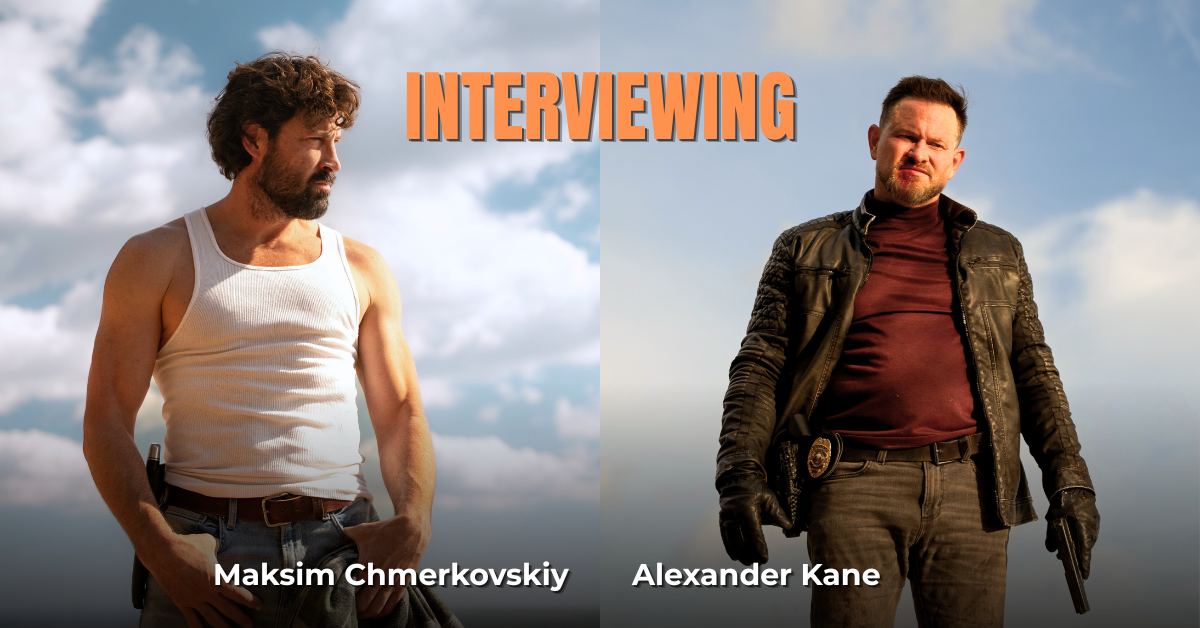
In March 2025, producer Alexander Kane was on the Athens, Georgia, set of the upcoming film “Three Holes and a Donut,” starring James Franco and William H. Macy. And the day proved to be pivotal.
Kane, owner and founder of Workhorse Cinema and Skyframe Films and a Georgia native, recalls, “One of the investors brought his friend to watch. She was interested in what we were doing, and she wanted to meet James Franco. But she was just glued to her phone watching these foreign videos called microdramas. And I was like, ‘What is that?’”
Kane’s investor gave him an introduction on the spot. The woman was caught up in a microdrama, an ultra-short video series shot in a vertical orientation for mobile viewing that uses cliffhangers to reel in viewers and entice them to pay for upcoming episodes. The highly melodramatic micro-stories of romance, revenge and high-stakes drama originated in China.
“So I stayed up all night till the sun came up and I learned more about microdramas from ChatGPT and Grok and everything else I could get my hands on,” Kane says. “I watched and watched, and I broke down how they were made.”
During his overnight research, Kane learned something else: over a four-year period, microdramas had grown from roughly a $3 million industry to a $3 billion industry.
So, that night, he hatched a vision to take the microdrama out of its low-budget league and turn it into a miniature masterpiece of superb storytelling.
“On the first verticals I ever made, several one-episode pilots to try and sell to Netflix or any one of the big streamers that might get into verticals, I had Franco and John McTiernan (director of the 1988 action classic “Die Hard”) on set toying with the dual-format aspect of the shoot,” Kane says.
“It was an interesting conversation, and from it has sprung [my microdrama]‘Wild Silence,’ which is a game-changer and a watershed moment for the microdrama industry and Georgia’s incubation of that,” he adds.
Making vertical microdrama in a new way, with new players
The dual-format method of producing a microdrama (which Kane has coined simply “Dual Format”) involves wrapping the production of a vertical in with the production of a feature film. It’s a tactic that adds a production sophistication to the genre and facilitates the financing necessary to produce a high-polish microdrama that can stand alone as a work of art when viewed on the audience’s cell phones.
Dual Format efficiently uses everyone on the same set, with the same actors, and on the same budget, with a script written specifically for the vertical production.
Over the past two years, as the demand for microdramas has surged, the production value, cinematography and acting on his competitors’ work has remained subpar, Kane observes. So he realized he would need to continually educate investors and world-class actors to get his emerging, more polished artform off the ground.
“That’s the eternal struggle of a producer, how do I get the product the artist is happy with and that satisfies the investor and distributor,” Kane notes.
As he puts it, “As an actor, a producer, an investor, a human being on earth and a father of six, I have a unique perspective on compromise.” So he has taken that innate ability into every pitch scenario with other professionals in the film industry.
One key element of Kane’s dual-format microdrama formula is that it actually has the potential to draw in top acting talent that used to look at the ultra-short genre and run the other way.
The first actor he pitched the idea to was Franco, who was skeptical about appearing in a microdrama but said he’d listen.
“I said [current]microdramas were so bad they needed cliffhangers, and that if they weren’t bad, they wouldn’t need gimmicks like [grand]explosions or sex,” Kane says. “The reason you need cliffhangers to keep people watching is because it’s not magnetic art.”
Franco warmed to the idea and gave it a chance.
Kane’s “Wild Silence,” as a result, was pitched to Franco but ultimately ended up starring Maksim Chmerkovskiy, a Ukrainian actor and dance choreographer who famously spent 15 seasons on “Dancing With the Stars.”
In the mid-1990s, Chmerkovskiy and his family immigrated to the U.S. and landed in Brooklyn, New York, where the ballroom dance professional and choreographer found a welcome reception and later “Dancing With the Stars.”
Eventually, Chmerkovskiy relocated to LA and became a student of famed American acting coach Ivana Chubbuck.
“Maksim came [to Georgia]to shoot a movie with me and the stars aligned, because the company I’m partners with for my microdramas were also trying to break out and be the first ones to do an elevated vertical [microdrama]with a talented actor. Serendipitously, they also happen to be from Ukraine,” Kane says.
Chmerkovskiy’s take on Dual Format verticals
Chmerkovskiy was open-minded about trying Kane’s elevated microdrama approach.
“It’s a better story that gives both audiences [horizontal and vertical viewers]what they want,” Kane interjects of the arrangement. “And Maksim could see that.”
According to Chmerkovskiy, the dual format workflow on set proved to be an organic experience. First off, the script drew in the dancer-turned-actor, the financials of production made sense, and he realized “this new outlet is going to open up creative opportunities in the industry, and I’ve got to stand up to the innovation.”
Chmerkovskiy adds, “I’m very proud to be a part of that type of movement, and to do the work in Georgia with Alex in a bit of a suburban, quiet [area outside Athens].”
Continuing to cultivate the buy-in
Getting microdrama buy-in within the film industry has been a bit like getting people to accept the positive uses of AI in filmmaking, Kane finds. It’s something different and most people don’t like change.
“I was talking to [a filmmaker]the other day, and I said, ‘You can’t afford a helicopter, but I could give you a helicopter in the woods over the criminals [in the scene]for free,’” he says. “And the guy says, ‘You’re not putting AI in my movie!’”
So Kane told him it shouldn’t matter if it’s VFX, CGI or AI, as long as they loved the end result on screen.
This struggle to accept and find appropriate uses for new technologies like AI has perhaps helped Kane build up the muscle required to pull in the industry’s embrace of a higher-quality microdrama made in a totally new way.
“I can see what the audience is asking for [in terms of verticals], and I realized I could give them a better product than what’s out there … in a climate where investors are terrified to invest in movies and they’re greenlighting less and less of them and for lower budgets with compressed timelines,” he notes.
For Kane, it’s simply a no-brainer.
“It works if you have a good story and good actors. I mean, I could watch Daniel Day Lewis sit in a chair and stare at the camera for 90 minutes,” he laughs.
“So the traditional microdramas out here have a billion followers in a billion dollar industry. But what I’m saying is, the next evolution—when people get tired of that product—is a better story, better acting, better cinematography, better editing, better color, better sound,” he states.
“If something is going in a new and better direction,” Kane notes, “I always want to embrace it and get out the door before everyone else.”
Always innovating, Kane is working “on-set writing, co-directing and shooting an even wilder project Dual Format right now,” he says.
“I took Dual Format to another level this week and even shot a rom-com feature and a super melodramatic microdrama with two very different stories and endings, including switching actors and roles in both … so, different actors in both stories [are]playing different characters,” Kane closes.