
By Carol Badaracco Padgett, Senior Writer
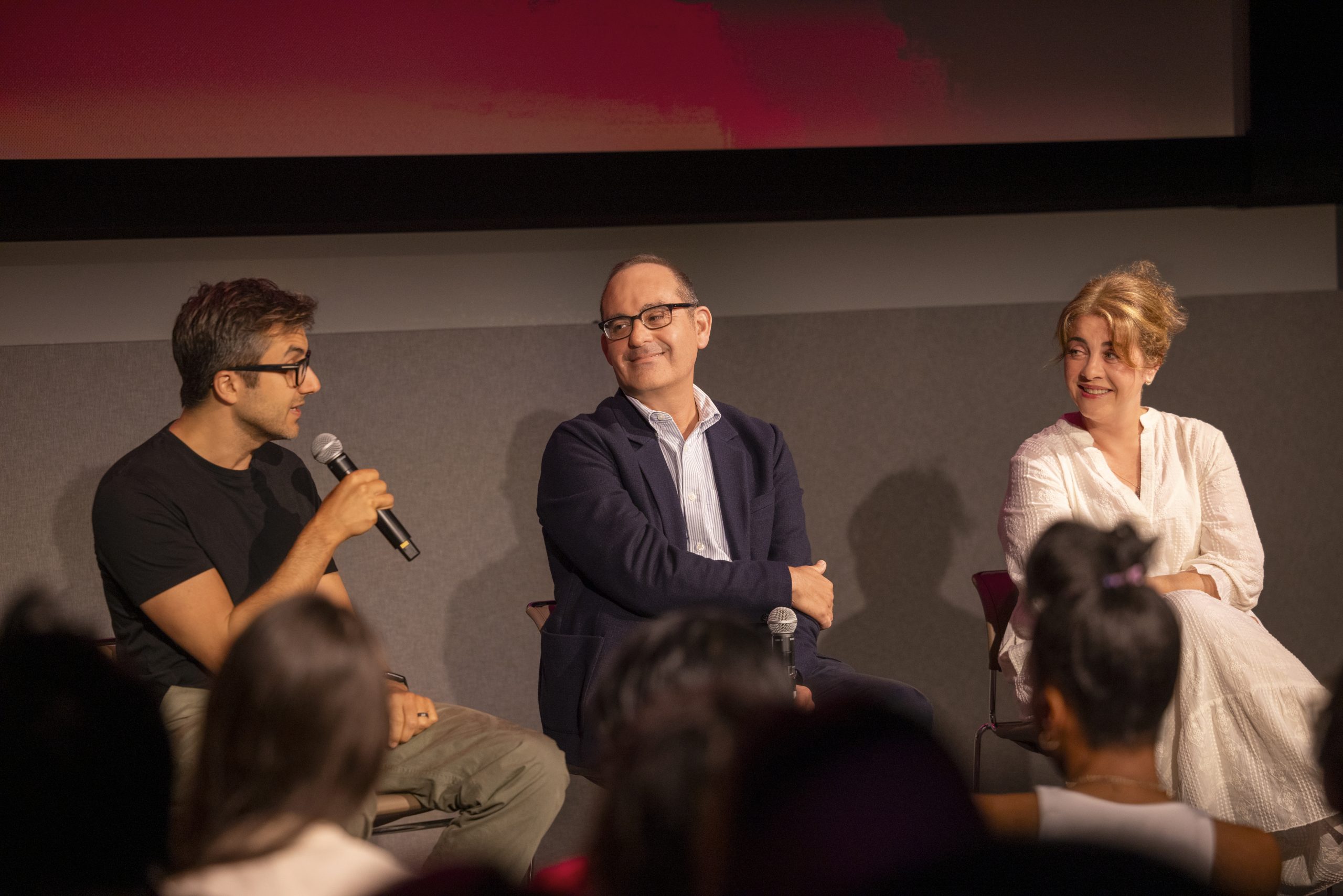
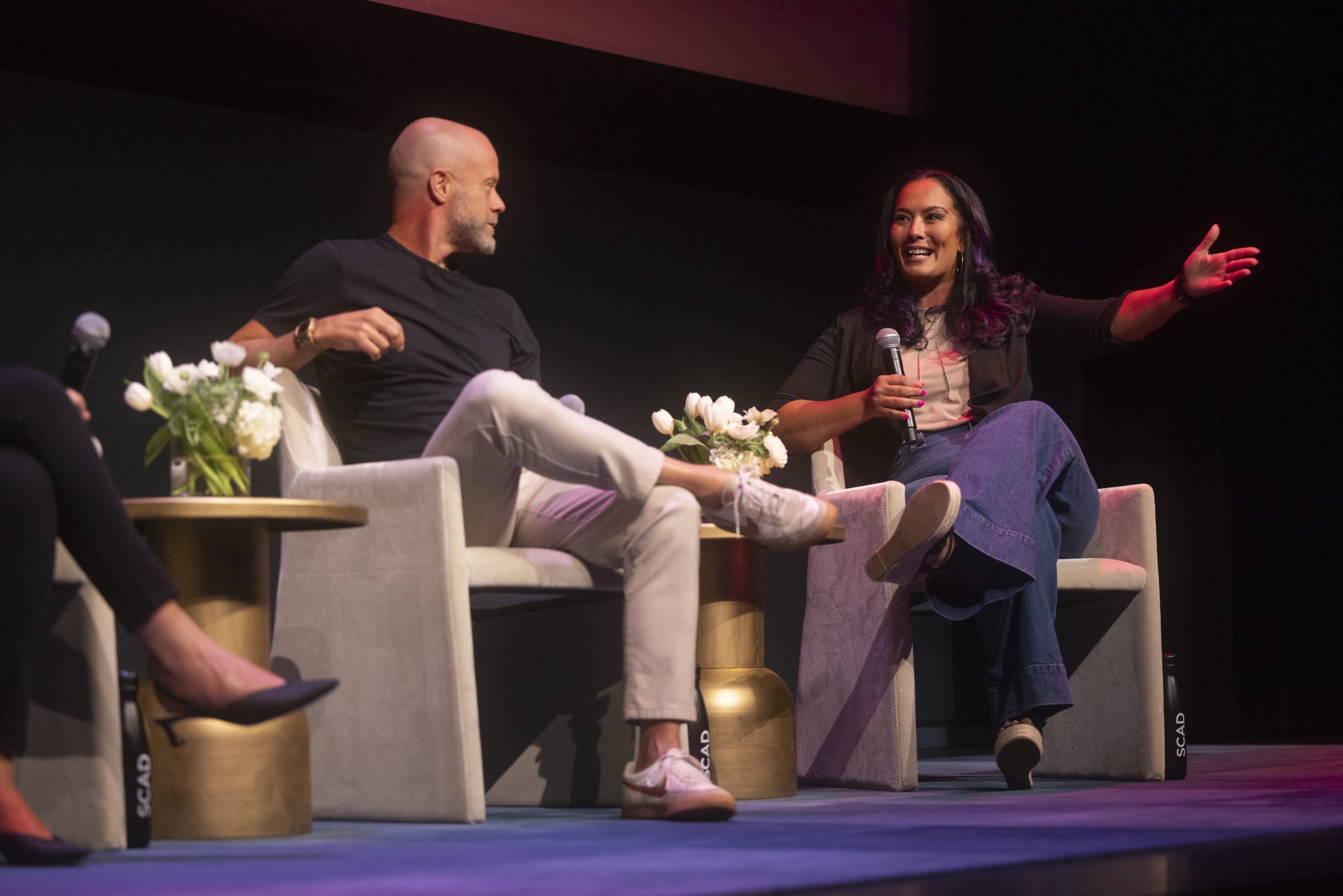
Maybe you’ve read recaps of the Savannah College of Art and Design SCAD TVfest: True Crime event, held at its Midtown Atlanta campus at SCADshow last week on July 12, 2024. Or maybe you attended in person. But if you’re a content creator actively working within the creative economy of Georgia – or aspiring to – you will want to hear more.
So, Georgia Entertainment went on a mission to learn more, to dig deeper with several of True Crimes’ top panelists representing the genre: Christopher Barbour, writer and executive producer of Criminal Minds, and Dateline correspondents Andrea Canning and Josh Mankiewicz. Read on to see what they shared.
First up, sitting across a table from Criminal Minds’ Chris Barbour is a pinch-me experience. But when it’s just the two of you and you can ask anything you want, it’s mind-blowing.
Georgia Entertainment: Criminal Minds brings to life utterly horrific events. Yet, the series and the genre itself can’t be all dark all the time. There are lighter elements subtly woven in. How do you create them in Criminal Minds?
Barbour: “It’s more challenging on Criminal Minds to do the lighter elements of it. But long before I was around, Kirsten Vangsness’s character, [FBI Technical Analyst] Penelope Garcia, [brought the light], and we really emphasized this when we came back — she’s the light. That character helps to bring some humor, to bring a perspective that takes the edge off of some of the things. Because we do like to take the audience on a little bit of a roller-coaster ride. Scare you at the beginning, and then there’s sometimes the good before the bad, before the team finds out that there’s an evil in the world, and we really want to scare you and know this is something that needs to be stopped. And the Penelope Garcia character, and the way Kirsten Vangsness plays her, is able to bring an empathy and not just be relentlessly horrific. So that helps us tremendously.
I think in the Paramount+ series, Criminal Minds: Evolution [the sequel to the original series on CBS], we’ve tried to explore more of what would be the significant trauma that these investigators would go through. It’s hinted at in the first incarnation of the series, but in our return, [we’re] really leaning into that a little more, as well as the aspects of the evil Elias Voit [the leader of a cult of serial killers in the series]– yes, he has these impulses, but he’s in conflict with a part of him that genuinely loves his family and wishes that could be the only path he takes. So that’s another element of trying to bring out the lightness, or just trying to balance it, which is challenging. Because I speak for myself, I do like the scarier parts of it, like the horror movie element of the show for myself. And then because of the writing staff — we have Erica Messer [the showrunner]and Breen Frazier, our no. 2, we really find a nice balance of empathy and finding the light.”
___
Next, Georgia Entertainment sat across the table from Dateline’s Andrea Canning and Josh Mankiewicz. They’re quick, engaging, and they riff together so well.
Georgia Entertainment: When you’re investigating a True Crime story and fleshing it out journalistically, you’re among a sea of others who want this story and to put it in front of an audience. What do you do to get there first – or to get there differently?
Canning: “That’s the bane of our producers’ existence. And the more popular True Crime becomes, the more people are trying to go after the same story. It’s a commitment. And to be honest, our producers put in the biggest commitment of trying to lock it in and trying to book the people. I will help any time I can. I’ll go to court, I’ll go to dinners, if I’m asked, to coffee. It’s really just putting the time in – you go to court every day, you are there for the whole trial. You say hi to people in the bathroom. You’re being that face that people start to get to know and they realize that you’re really in this. And then you get your verdict, and that’s when the frenzy is on and you’re trying to really lock in interviews with everybody.”
Mankiewicz: “She’s in the middle of the Karen Read [accused of killing her Boston police office boyfriend]trial right now.”
Canning: “Yeah, it can be very, very competitive. You win some and you lose some. But you’ve got to do your best, and you’ve got to put the time in. I will say, too, I feel like the selling point for Dateline is that we put on such a quality show, and people know our name. They know Dateline. And so that helps so much – and they know us, too. Oh, I know Andrea, I know Josh. I know Keith [Morrison].”
Mankiewicz: “And I know what this will be like if I say ‘yes’ to this, because I’ve seen it so many times. There is an enormous amount of mystery out there, among families, as to what will happen if I say yes and I let these people in and tell our story to them. But with Dateline, you know. It’s one reason why a lot of police departments and prosecutors don’t have any problem cooperating with us. I will say to them, ‘Just talk to anybody else who’s ever worked with us.’”
Canning: “You also have to be upfront and honest. Don’t hide anything.”
Mankiewicz: “Yes.”
Canning: “If they want to know who you’re interviewing, tell them. If they want to know what direction the show’s going in, tell them. We’re not going to give away all the state secrets and hand them the script …”
Mankiewicz: “We don’t give people the questions or tell them what others have said and things like that.”
Canning: “Right. But there’s a lot we can tell them, and we can explain the process and where we’re going with the story.”
Mankiewicz: “In a lot of cases, maybe not in the Karen Read trial, [but]In a lot of cases, the stories we cover are ones that are not on your lips. They’re not well-known. So one of the things is we’re able to say to those families, ‘Well, you got 11 inches in your local newspaper, so I don’t think this was read outside any of the places where that newspaper is delivered. And you got a minute and a half on the local TV news. And now all of that has moved on. We’re gonna tell that story for two hours, so all the nuance you think has been missing from all the coverage of what happened to your loved one – everything from their life, to what happened, to who’s to blame, to the trial and how that turned out, to your relationship with that, to your relationship with maybe the killer – we’re going to be able to tell all of that.’ We’re not going to have to leave out vital parts of that. And that’s a huge advantage.”
To read more original features, follow us on social media and subscribe to our newsletter.
Photos courtesy of SCAD.