
By Marty Lang, Director of the MFA in Film, Television & Digital Media at the University of Georgia
In a recent issue of Harper’s Magazine, Daniel Bessner authored a piece called, “The Life and Death of Hollywood.” The story is an in-depth history of the regulation and deregulation that has led us to our current moment in the film and television industry. In it, Bessner interviewed an anonymous, mid-size studio head who gave a frank, alarming report of how current Hollywood is working.
“The industry is in a deep and existential crisis,” the head told Bessner. “It is probably the deepest and most existential crisis it’s ever been in.”
While the article focused mostly on the plight of screenwriters in film and television, the message was clear—all of the industry is in a moment of reflection.
These moments provide opportunities for innovation. And nowhere are those opportunities more pronounced than in the world of film education.
Models of fundraising, production and distribution are being created and upended, seemingly daily. Film programs around the country, many of them locked into traditional models, are not built to operate within this amount of change.
But the University of Georgia’s is.
I was brought on as Director of UGA’s Master of Fine Arts in Film, Television & Digital Media in January. My mandate is to help build a program that can support the growth of the film and television industry in Georgia. This means not only by training for traditional roles, but also looking to the future, and the jobs and opportunities that may emerge there.
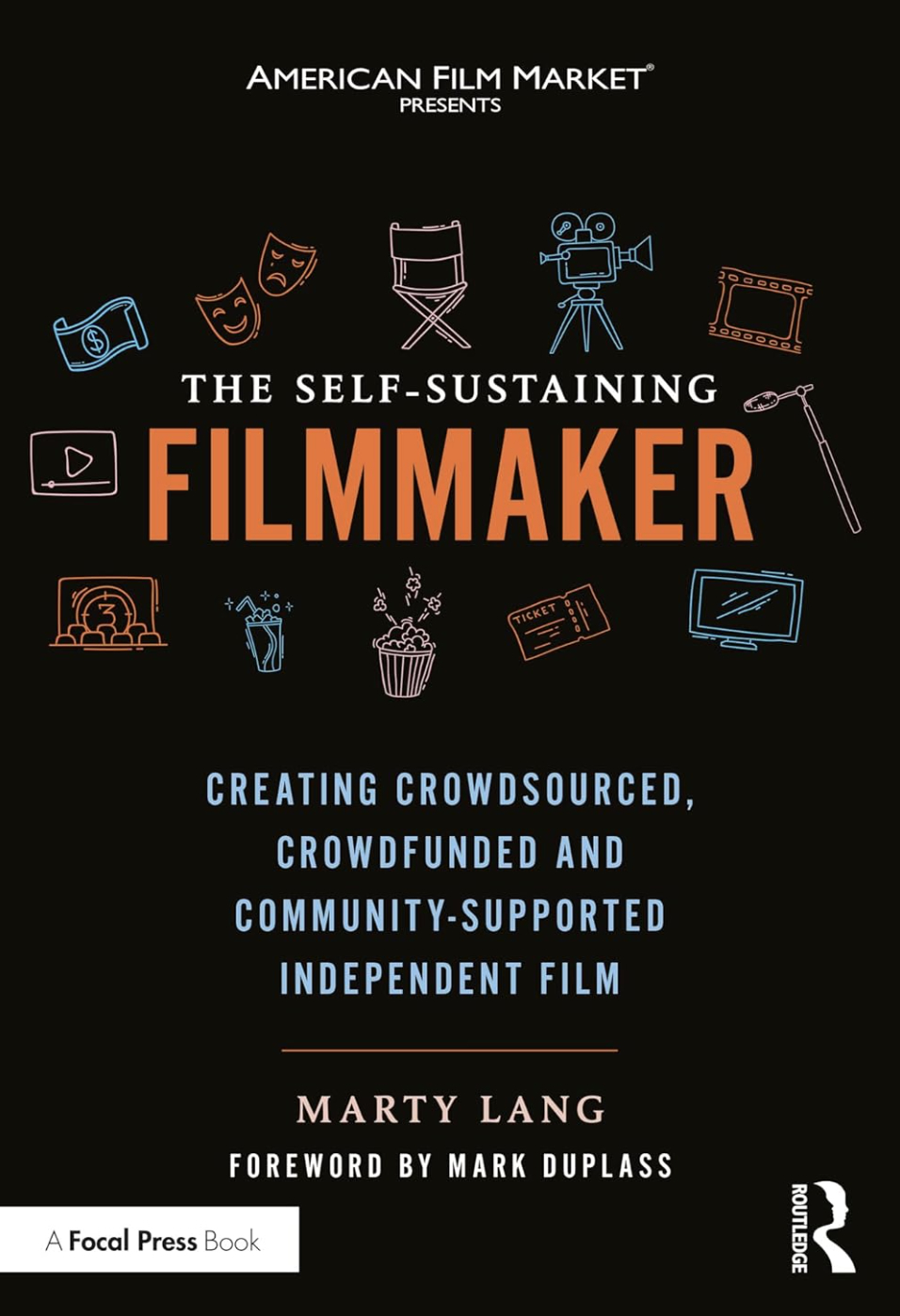
My research has been in film and television workforce development and entrepreneurship, and I’ve used it to write a book called, “The Self-Sustaining Filmmaker,” which will be published this summer by Focal Press/Routledge. The book outlines three major themes that future filmmakers must embrace to be successful and to adapt to an ever-changing industry.
As you’ll see, UGA’s MFA Film program is a shining example of all three.
1. Radical Collaboration — The idea of collaboration is intrinsically built into the process of filmmaking, but with developments in technology and business happening all the time, filmmakers and film programs must now look beyond their siloes and collaborate with folks whose work they may not completely understand.
This idea is foundational to UGA’s MFA Film program; it is a collaboration between two colleges, the Franklin College of Arts & Sciences and the Grady College of Mass Communication & Journalism. Ours is the only multi-college graduate program at the university, and it provides our students with twice the resources they would find in any other.
Students can utilize faculty expertise in music, film studies, acting and design through Franklin, video production, advertising and public relations through Grady and screenwriting through both colleges.
In addition, the two colleges have collaborated on a trailblazing program in long-form production. Di Quon, a graduate acting student in our Department of Theatre & Film Studies, is the driving force of a feature film that’s currently in production. For Quon’s MFA thesis, she is the lead actress, co-writer and producer of “Classics Undone,” a feature drama that shows the lives of its characters mirroring the stories of well-known plays, as they try to save a local theater from closing.
MFA Film professor Sanghoon Lee is the film’s director, and MFA Film students and alumni worked as crew members. Grady College also is taking part in the project, as their advertising students developed a marketing plan for the film as it readies for theatrical release.
In addition, the film has reached out to the Athens community and received support from town businesses, including the local staple Jittery Joe’s Coffee. This pioneering project will be the blueprint for future university production of feature-length films and full-length television.
2. An Entrepreneurial Mindset — Too many film programs have operated from the sole assumption that graduates will get hired to work in creative or technical positions in the industry. These programs avoid the world of entrepreneurship, and the possibility that graduates can create their own businesses, become their own bosses—and even make and monetize their own films.
The MFA Film program has multiple opportunities for students to learn more about the business side of the industry, and to work with students from across the university. Whether through the “Business in the Creative Economy” course offered by Terry College, “Legal Issues in Fine Arts,” offered by Franklin College or “Producing for the Screen,” offered in the MFA Film program, students are exposed to the financial, logistical and management realities of the industry.
They also learn how to find their own resources. One of the biggest focuses of “The Self-Sustaining Filmmaker” is the use of crowdsourcing and crowdfunding (through portals like Georgia’s own Seed&Spark) to find the resources they need. I also teach a semester-long course in crowdsourcing and crowdfunding in the MFA Film program, one of only two offered in the U.S.
The course involves students working with outside filmmakers on live crowdfunding campaigns, and it also teaches how to distribute their work themselves, instead of giving away revenue to distributors who may not have their work top of mind.
The course empowers students to create their own projects, without having to wait for permission. UGA Film students graduate ready to build their own companies and brands, tell their stories on their own terms and reap all the financial rewards.
3. Holistic Filmmaking — For so long, many film programs have focused on specification—students concentrated on single crafts like screenwriting, directing or cinematography and, as a result, they were kept from accessing meaningful education in other areas. Future filmmakers must understand how every position on a film set works, and how every phase of filmmaking interacts with all the others—including marketing and distribution.
This will help students make decisions that consider the entire process. For example, picking a location to shoot a film may not be just a location—it could also double as a distribution venue for the film when it’s completed.
UGA’s MFA Film students take a first-year core of courses that address the entire process before they pick second-year tracks, so they can understand how making a decision at one phase can affect a later phase. Our students begin working on their thesis projects with a holistic understanding of filmmaking.
They also execute their thesis projects with another group of well-trained Georgia students. Thanks to a partnership with the Georgia Film Academy, MFA Film students can have trained below-the-line crew members on the sets of their thesis projects. While MFA Film students write, direct and produce these projects, GFA students provide the invaluable crew work needed to make these projects shine.
And when they get into post-production, GFA students can work as editors and sound designers with them as well. This provides MFA Film students the chance to work with a proper crew, instead of trying to do every job themselves, and teaches them about communication and how to work in a leadership position on set.
The film and television industry is entering a new age, and the way we tell stories is undoubtedly going to change in the future. Whether artificial intelligence (AI), virtual production, the ubiquity of crowdfunding and self-distribution or the ongoing democratization of production, filmmakers will need new skills to accommodate the new ways to make their work.
Film students who understand collaborating radically, thinking entrepreneurially and planning holistically will be best positioned to succeed, at the cutting edge of our industry.
And the University of Georgia will be with them at the cutting edge, building an exciting, new paradigm of film education.
To read more features from the Creative Economy Journal, visit here.
Continuing our focus on creative education, Georgia Entertainment is proud to release the 3rd edition of the Creative Economy Journal, set to debut at the ‘Signature 100‘ event on December 11th. Follow us on social media and subscribe to our newsletter for the latest updates.