
By Georgia Entertainment staff
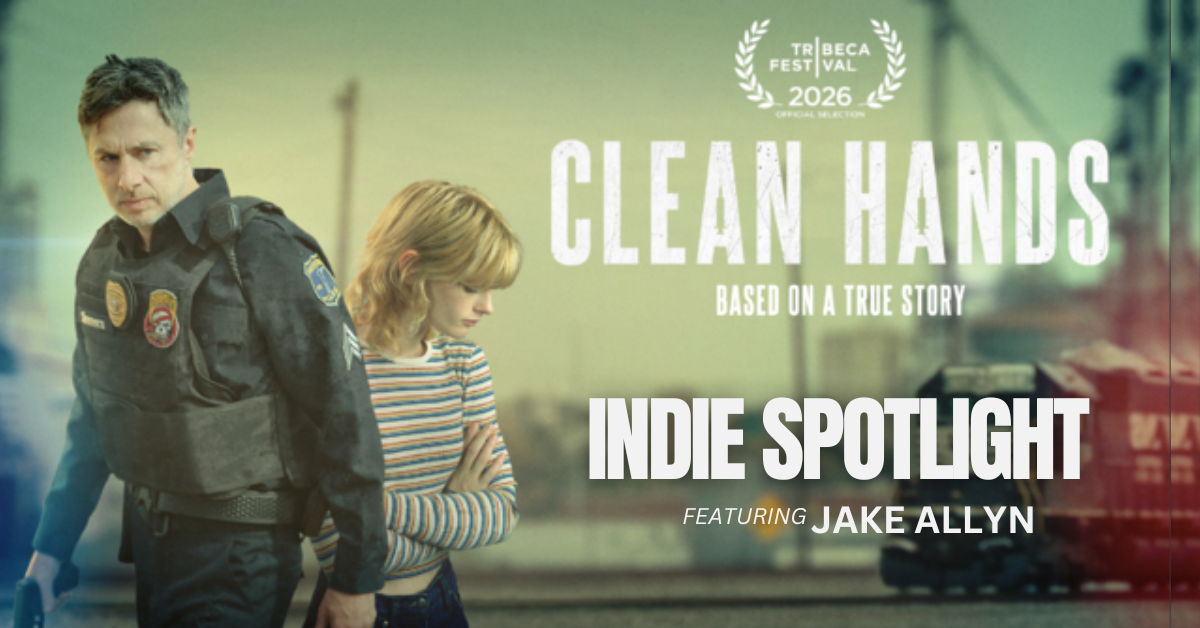
Writer-director Jake Allyn, alongside producers James Suttles and Jason Winn of Atlanta-based WW/SF Entertainment, sat down with Georgia Entertainment to discuss “Clean Hands,” a true-story drama about the American opioid crisis that follows narcotics officer Kevin Simmers as he works the heroin pipeline in Hagerstown, Maryland, while privately fighting to save his 19-year-old daughter Brooke from addiction.
That struggle became the real-life origin of Brooke’s House, the all-women recovery home Simmers founded after losing her. Shot in Georgia with a local cast and crew and inspired by true events, the film stars Zach Braff as Simmers alongside Esther McGregor as Brooke, with Holt McCallany, Abigail Spencer and Lucas Till, and pledges one-third of its profits directly to Brooke’s House.
Produced by WW/SF Entertainment together with brothers Jake and Conor Allyn, “Clean Hands” made its world premiere at the 2026 Tribeca Festival on June 7 at Village East by Angelika in New York. Within days, it landed a North American distribution deal with Vertical.
Can you tell us a little about “Clean Hands” and the true story behind it, including the connection to Brooke’s House? What made this a story you felt needed to be told?
ALLYN: “Clean Hands” is the true story of narcotics officer turned recovery advocate Kevin Simmers and his daughter Brooke. Together they faced an unbelievable two-year journey with addiction, and Kevin ultimately turned in his badge to build what is today Brooke’s House, an all-women recovery home.
When I came across Kevin and Brooke’s story, I simply could not look away. Kevin ran a drug task force built on incarceration, yet at home he was desperately trying to help his 19-year-old daughter. As a filmmaker, it was a striking way to explore the American drug crisis, but on a personal level, Kevin and Brooke had an unbelievable bond. People would say they were addicted to each other. Their story was tragic, miraculous and so powerful. In an age of endless superhero movies, this was a story about real-life superheroes. Kevin sacrificed everything he once believed in to save his daughter and her legacy.
During my research, I had the chance to stay near Brooke’s House and interview women in recovery, addiction counselors, police officers who served with Kevin and of course Kevin and Dana Simmers. Beyond the research, it led to a unique partnership. A huge part of Brooke’s House is its work programs. The women run a coffee and chocolate shop, a junk-removal business and a thrift store, so we made the film one of those work programs. Women in recovery worked in the art department, served as PAs and acted in the film. One-third of the film’s profits will also go directly to Brooke’s House. “Clean Hands” is more than a film. It’s a living way to continue the fight against addiction.
WW/SF Entertainment led the production, and both of you bring strong Southern roots to the project. How did that shared Southern perspective shape the tone and authenticity of the film?
SUTTLES & WINN: We both come from Southern backgrounds, and that perspective naturally found its way into how we approached the film. Growing up and working in the South, we’ve always been drawn to stories that feel grounded in real people, stories where relationships, community, family and personal values carry as much weight as the plot itself.
That shared point of view influenced everything from the tone of the performances to the pacing of scenes and even the way characters communicate. “Clean Hands” was a once-in-20-years film. It will outlive all of us, and it will save lives.
What drew the team to make this project in Georgia specifically, and how important was the state’s film infrastructure and community in bringing the story to life?
ALLYN: This was a very ambitious movie. On a limited budget, trying to tell a true story that spanned more than two years across many locations was a mountain. We couldn’t take chances. We needed a state with real production infrastructure, a place that was affordable and supportive but that had the quality and manpower to get this done at the highest level. Georgia was high on our list, but when we met Atlanta producers James Suttles and Jason Winn, who have more than a decade of experience in the state, the search was done.
I’ll never forget getting the first web link to a list of location options from Michael Sokol. The pictures were amazing, there were tons of options, and everything was perfectly categorized. It may sound small, but as a director facing a thousand questions a day, I took the biggest sigh of relief, because I knew my job had just gotten 50 times easier.
Georgia’s tax incentive program has played a major role in attracting productions to the state. How did the incentive impact the scope, scale and feasibility of this film?
SUTTLES & WINN: Georgia’s tax incentive program absolutely played an important role in making this film possible, but for us it goes beyond simply reducing costs. It creates opportunities to put more resources on screen. Independent and midbudget filmmaking is always a balancing act between ambition and practicality, and Georgia’s incentive helps close that gap. It allowed us to think bigger creatively while still maintaining financial discipline.
From a production standpoint, the incentive gave us the flexibility to invest in the things audiences actually feel: more production value, stronger locations, additional shooting support and more time focused on performance and storytelling rather than constantly compromising to protect the budget. It helped expand the scope of what we could achieve without losing the intimacy and character that were so important to the film.
As producers, we’ve built WW/SF Entertainment around finding efficient ways to maximize every dollar on screen. Having produced in different environments, we’ve seen firsthand how Georgia’s infrastructure, including the local actors and crew along with Camera Ready Georgia, creates a film-friendly environment. The incentive isn’t effective in isolation. It works because it’s paired with an ecosystem of talented professionals and production resources that let projects execute at a high level.
For this film specifically, Georgia gave us the ability to stay competitive while preserving the creative vision. Instead of spending energy solving financial limitations, we were able to focus on making the strongest film possible. That combination of economic feasibility and creative freedom is a big reason Georgia continues to attract productions, and why we keep building projects here.
You led the creative vision as director. What was your approach to telling this particular story, and how did you shape its emotional core?
ALLYN: On most films, the production buys a bunch of director’s chairs for video village. The backs usually say director, producer, cast and so on. I made sure we only bought one chair, and it said BROOKE. No one was allowed to sit in it. It sat at video village every day of the shoot to honor Brooke’s memory, and it was my quiet way of reminding everyone that this was a real story. That was the core of everything. Honoring the real story was our north star.
I really appreciate the local crew for throwing themselves into this very challenging indie. We were telling an ambitious story about tough subject matter, surrounded by the real people from the story. Kevin and Dana Simmers, the officers who served with Kevin, and Brooke’s real drug counselor were often on set. But even 11 hours into a grueling shoot day, the crew remained incredibly respectful, always making sure we were honoring the story and the real folks around us.
How did you go about assembling the cast and crew? Were there particular Georgia-based collaborators or local talent who became essential to the production?
SUTTLES & WINN: Assembling the cast and crew always starts with finding people who connect to the story first and bring both talent and collaboration to the process. At WW/SF Entertainment, we’ve built projects over the years by creating teams that combine trusted longtime collaborators with new voices that bring fresh energy to each production. From our years of production in Georgia and the surrounding areas, we knew Georgia could stand in for many locations, making it the perfect fit for “Clean Hands.”
For casting, we focused on finding actors who could bring authenticity and emotional truth to the material rather than simply filling roles. Georgia has become such a mature production market that we had access to an incredible pool of performers locally, and we were able to cast people who elevated the characters in ways that went beyond what was on the page. The goal was always to build a cast that felt natural together and could create performances audiences would connect with.
On the crew side, Georgia continues to be one of the strongest production communities in the country. We were fortunate to work with experienced local department heads, technicians and creatives whose professionalism and efficiency had a direct impact on the quality of the film. One of the strengths of producing here is that you can assemble world-class teams across every department while still maintaining the collaborative spirit that independent filmmaking thrives on.
What made this production special was how many Georgia-based collaborators became true creative partners. There’s a strong sense of ownership and pride in the local film community, and that energy carried through the entire process. Rather than feeling like a production that simply came into Georgia to shoot, this felt like a film built alongside the people who live and work here every day, and that became part of the identity of the project itself.
Having the film accepted into the Tribeca Festival is a milestone not just for the project, but for Georgia’s growing independent film community. What did that recognition mean for the team, and how important is it to showcase Georgia-made storytelling on a global stage?
SUTTLES & WINN: Being accepted into Tribeca was incredibly meaningful for all of us, because festivals at that level validate years of work, risk and belief in a story. Independent filmmaking requires an enormous amount of trust from financiers, cast, crew and creative partners, everyone who commits their time and talent to bringing a project to life. For our team, Tribeca represented more than a premiere. It felt like recognition that the story resonated and that the work could stand on an international stage.
For us personally, there was a deeper sense of pride, because this project reflects everything we’ve been working toward for the last 25 years. We’ve spent years proving that meaningful, high-quality films can be developed and produced outside the traditional industry centers. To see a project built with Georgia talent, Georgia infrastructure and a Georgia-based production approach reach a festival like Tribeca reinforces that independent filmmaking in this region isn’t emerging anymore. It’s arriving, and it will keep thriving as the industry figures out what the future holds.
What made the moment especially rewarding was knowing the recognition extends beyond our team. Georgia has become known globally for large studio productions, but there’s also an incredibly strong independent film community here: writers, directors, producers, actors and crew creating original work. Having a film showcased at Tribeca gives visibility to that entire ecosystem and helps demonstrate that Georgia isn’t just a place where productions come to shoot. It’s a place where stories are developed, produced and creatively led.
At a festival like Tribeca, audiences and industry professionals come from all over the world, and that creates an opportunity to showcase a perspective that feels distinct and authentic. We’re proud that this film gets to represent not only our team but the creative energy and storytelling culture that keeps growing in Georgia. If it opens the door for more independent filmmakers here to believe their work belongs on that stage too, that may be one of the most rewarding parts of the experience.
ALLYN: Getting to call all the cast and crew to tell them we’d been accepted into Tribeca was one of the best sets of calls I’ve ever gotten to make in my life. The crew went above and beyond for this movie, so I’m just proud to see them rewarded with a festival like Tribeca.
What do you see as the key factors in the sustainability of Georgia’s film industry, for both indie creators and larger productions? And what do you hope the next five to 10 years look like for Georgia?
ALLYN: The sad reality is that more and more productions are leaving the United States, so I think it was really important to represent a Georgia-made production at such a high-level festival. I hope it showed other filmmakers the quality that can still be had in the U.S. I can never argue with a production needing to go where it has to in order to make a financially responsible decision, but I can say with certainty that our production may not have happened at all without the support of the Georgia rebate and the amazing production team at WW/SF.
SUTTLES & WINN: The long-term sustainability of Georgia’s film industry comes down to continuing to evolve from being known primarily as a production destination into being recognized as a true creative ecosystem. The tax incentive has been incredibly important in building infrastructure and attracting large-scale productions, but sustainability happens when you also invest in people: writers, directors, producers, crew, postproduction, education and companies creating original work from within the state. The strongest film markets in the world don’t just host productions. They develop talent and intellectual property locally.
For independent creators specifically, sustainability means creating more pathways between making a great film and building a lasting business. That includes access to development support, distribution relationships, financing tools, mentorship and opportunities to connect with audiences. Georgia already has the crew base, the facilities and the production experience. The next step is making sure independent filmmakers can grow careers here without feeling like they have to leave for Los Angeles or New York to scale their work.
For larger productions, consistency and continued investment in infrastructure will be key. Studios and networks need confidence that Georgia remains stable, competitive and capable of supporting productions at every budget level. We’ve already seen what happens when world-class crews, strong incentives and production resources come together. It creates jobs, attracts investment and builds institutional knowledge that benefits everyone, from studio features to independent films.
Over the next five to 10 years, our hope is that Georgia becomes known not only for where films are shot, but for where stories originate. We’d love to see more Georgia-based production companies, more locally developed series and features, stronger postproduction and distribution capabilities and more filmmakers building sustainable careers here. Success for Georgia isn’t simply becoming Hollywood South. It’s becoming its own creative identity, where projects are conceived, financed, produced and launched to audiences around the world.
 The Georgia Entertainment Indie Spotlight, sponsored by Universal Production Services at Assembly Studios, is a recurring feature dedicated to showcasing independent filmmakers with strong ties to Georgia. Through written Q&As, profiles, and other coverage, we aim to celebrate the creativity, resourcefulness, and impact of local filmmakers who are contributing to the state’s growing film ecosystem.