
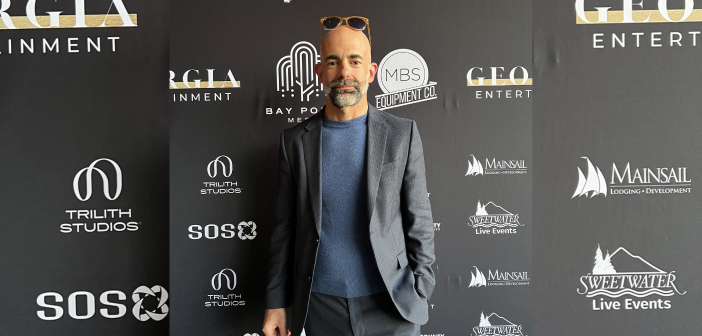
By Robroy Wiley
“I just want to create.”
It’s one of the most common statements you will hear from creatives and entertainment professionals. It is focused, authentic and admirable. It is also unrealistic and unsustainable. Hidden in that approach is a focus on creating to the detriment of the other factors needed for a successful creative career. Without logistics and financial planning, a creative’s dreams and aspirations just stay dreams.
The reality is that every successful creative treats each project as a financial project as much as a creative one. If your goal is to build a creative career that lasts, financial well-being is one of the tools that empowers creativity to flourish.
Financial well-being isn’t just an outcome of creative success. It helps make sustained creative work possible.
Without a focus on financial well-being, questions essential to a project’s success rarely get asked, such as, “Where does this idea sit on the spectrum of financial risk?” Every creative project falls somewhere between a sound investment and pure speculation.
Understanding the language of money changes the questions you ask before the first dollar is spent.
- Who is taking the financial risk?
- What assumptions am I making?
- What does success actually look like?
- If this doesn’t work, what happens next?
That’s when your mindset shifts. You stop thinking only like an artist and begin thinking like the steward of an idea.
Investors do not invest in passion alone. They invest in preparation. They want to know that the people leading the project understand both the creative vision and the financial reality needed to bring it to life successfully.
- Does this project create long-term value?
- Is there more than one way for this project to generate revenue?
- What assumptions are being made that haven’t been tested?
- What are the risks, and how can they be addressed to increase the chances of success?
Many years ago, I financed my own project. On paper it sounded like an excellent idea. In conversation, everyone around me agreed.
The vision was to impact the next generation by giving them perspective on what it took to build the wealth of previous generations. The concept was to create a platform where an older generation could share the real stories behind building their wealth so younger generations wouldn’t burn through their inheritance without understanding what it took to create it: the grit, the sacrifice and the time it took to build.
It was meaningful, purposeful and creatively aligned. I didn’t understand what it would take to bring it to life.
My biggest mistake wasn’t that the project failed to become what I imagined. My biggest mistake was believing that a meaningful idea inherently made it a financially viable one.
It didn’t.
I confused passion with preparedness.
I learned that creative risk and financial risk are not the same thing. A project can be creatively brilliant and financially unrealistic. Understanding that distinction changed how I have evaluated every opportunity since.
Creativity focuses the question: “What could exist?”
Finance focuses on answering: “How do we give it the best chance to exist?”
“I just want to create” is where many creatives begin. Creators who build lasting projects do something different. They use money as a tool for creativity to flourish because it is part of their creative language.
If this resonates, let’s connect.
Have a financial question? Ask Robroy.

Robroy Wiley is a financial adviser coach who works with entertainment and creative professionals to build financial well-being that supports their creative lives. He helps clients create stability while continuing to evolve, create and thrive, navigating the unique pressures creatives face, including irregular income, career volatility and emotional decision-making around money.
Using a science-based approach, Wiley helps clients build financial stability, recognize blind spots, navigate emotional financial moments and make purposeful decisions so their financial life supports their creative well-being and long-term vision.
This content is not to be considered investment advice and is not to be relied upon as the basis for entering into any transaction or advisory relationship or making any investment decision. Other organizations or persons may analyze investments and the approach to investing from a different perspective than that reflected in this content. Nothing included herein is intended to infer that the approach to investing discussed in this content will assure any particular investment result. All investing involves risks and costs. These risks may not always be mitigated through long-term investing or diversification. Your advisor can provide you with more information about the risks and costs associated with specific programs. Your advisor is not affiliated with Matson Money, Inc. The information contained in this content is for educational purposes only and is not intended as investment advice. No investment strategy (including asset allocation and diversification strategies) can ensure peace of mind, guarantee profit or protect against loss.